News | 10/08/2026

LMU Medical Scientist of the Year 2026: Dr. Naomi Vlegels

At the annual reception of the LMU School of Medicine, Dr. Naomi Vlegels from the Institute for Stroke and Dementia Research was honored as the LMU Medical Scientist of the Year 2026 for her work “Brain-derived tau for monitoring brain injury in acute ischemic stroke” (Science Translational Medicine, 2026). Here, she shares more about her research and her daily inspiration as a medical scientist.
Naomi Vlegels
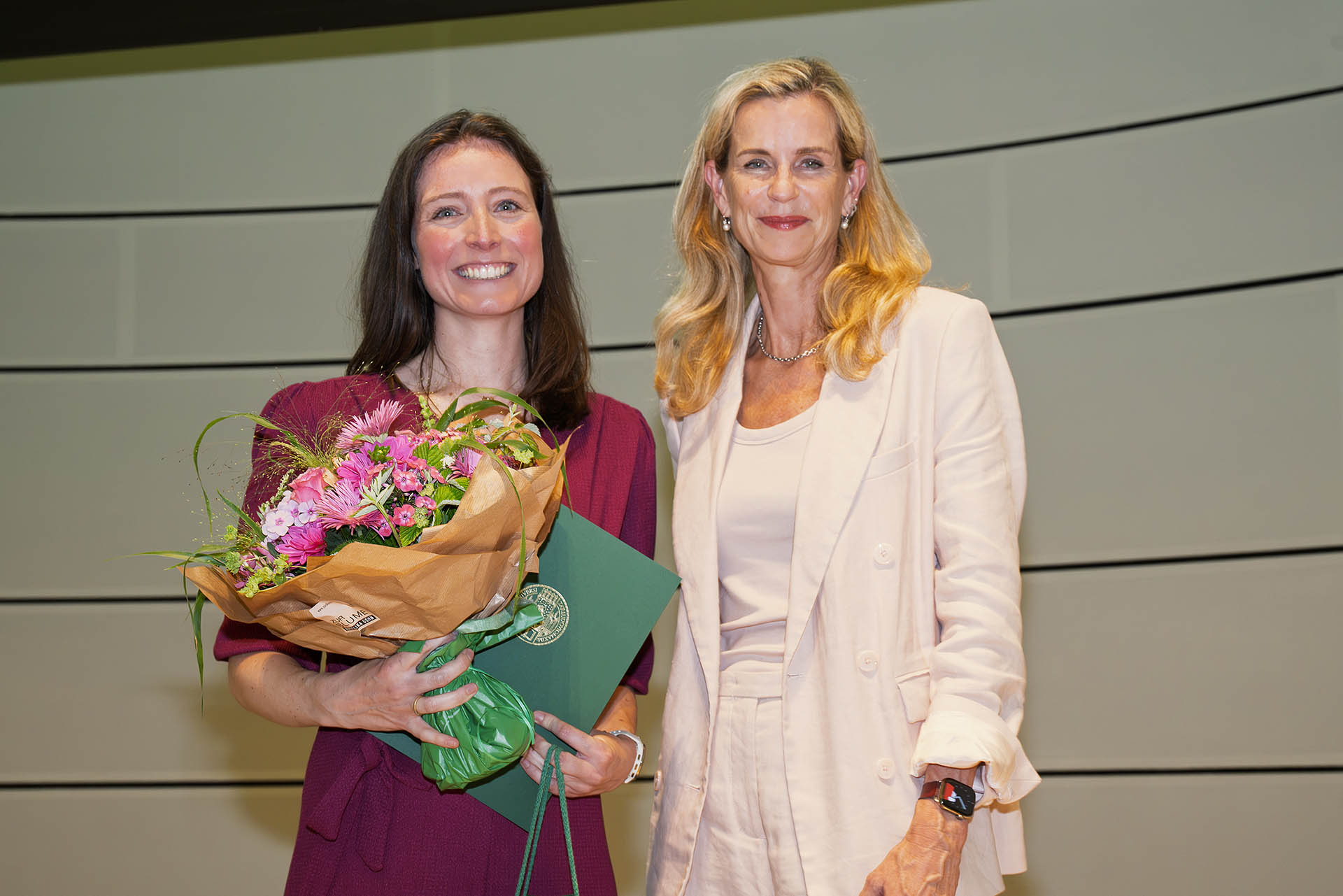
Prof. Dr. med. Marion Subklewe (right) presented the LMU Medical Scientist of the Year 2026 award to Dr. Naomi Vlegels of the Institute for Stroke and Dementia Research (ISD)

My award-winning publication

„In my publication we found that a new blood biomarker, brain-derived tau (BD-tau), can track the extent of brain injury after ischemic stroke over time. BD-tau can also predict patients’ functional outcome months to years later and detect the effects of treatments. While further studies are needed, BD-tau could help clinicians to monitor stroke severity more closely, detect complications earlier and evaluate new therapies more efficiently in clinical trials.”

My motivation for research

„I find the brain fascinating, it is such a complex organ and we still understand only a small part of its workings. I am especially interested in neurological diseases as they can have such a profound impact on patients’ lives. Doing research gives me the opportunity to use my curiosity, and work towards a better understanding of neurological disease and improved outcomes for patients.“

My daily inspiration as a Medical-scientist

„In my personal life I have seen the devastating impact of stroke. Witnessing how stroke can change someone’s life in an instant reminds me why this work is important. It motivates me to keep working towards better treatment and care for patients and their families.“

My goal(s)

“My goal is that my research translates into better care for patients. To achieve this goal I focus on developing clinically actionable biomarkers that can help clinicians to make faster and more personalised treatment decisions. Ultimately, I hope to make a real difference in stroke care.”

Publication

Brain-derived tau for monitoring brain injury in acute ischemic stroke

Naomi Vlegels*, Nicoló L. Knuth*, Konstantin A. Steiner, Linjie Zhang, Apolline L. Vix, Dilara Moumin, Irem Mirzen, Nada Khalifeh, Charlotte Forster, Benno Gesierich, Franziska Müller, Philipp Lohse, Jule Filler, Rong Fang, Matthias Klein, Konstantinos Dimitriadis, Nicolai Franzmeier, Thomas Liebig, Matthias Endres, Michael Goertler, Gabor C. Petzold, Silke Wunderlich, Inga Zerr, Thalia S. Field, Mirko Pham, Richard H. Swartz, Sven Poli, Jörg Berrouschot, Atif Zafar, Hauke Schneider, Jai J. Shankar, Anne Hege Aamodt, Jens Minnerup, Jennifer L. Mandzia, Gernot Reimann, Marios-Nikos Psychogios, Sibu Mundiyanapurath, Arno Reich, Leonard L. L. Yeo, Marco Duering, Paul Reidler, the DEMDAS Study Group, the researchers of the ESCAPE-NEXT biomarker sub-study, Mayank Goyal, Michael Tymianski, Michael D. Hill, Martin Dichgans, Steffen Tiedt.

Science Translational Medicine (2026)

DOI: https://www.science.org/doi/10.1126/scitranslmed.adz1280

*These authors contributed equally

Contact

Dr. Naomi Vlegels 

Institute for Stroke and Dementia Research (ISD), LMU University Hospital

Originally translated with DeepL