The LMU Clinic
Patient care, research and teaching. University medicine is based on these three pillars. Innovation thus becomes a program. At LMU University Hospital, doctors and representatives of numerous other healthcare professions work hand in hand with research and teaching.
Together, we provide the best possible patient care today - and at the same time pave the way for the medicine of tomorrow. We take responsibility and are committed to the well-being of our patients: with competence and heart, excellent care structures and state-of-the-art medical technology.
Medical focus areas at a glance
We treat each patient as an individual. To this end, we develop the optimal therapy for each individual case, if necessary, even across the boundaries between disciplines. One example of this is the Comprehensive Cancer Center (CCC). Here, proven specialists from all disciplines required for the best possible diagnosis and treatment of oncological diseases work hand in hand for the benefit of those affected.
This personalized medicine is also reflected in the production of cancer drugs on site in our hospital pharmacy. The highly effective substances are individually configured there for each patient.
The fact that we are able to help more and more seriously ill people today is also a result of translational research. This means that the latest research findings flow directly into treatment: "from bench to bedside", i.e. from the laboratory directly to the patient's bedside. By participating in scientific studies, our patients can also benefit from the latest treatment methods and active ingredients.
Diseases of the cardiovascular system and other organs are among the most common causes of death today. Organ transplantation is often the only promising and life-saving option.
The LMU Klinikum is one of the leading centers for transplantation medicine in Germany. Experienced teams are available around the clock for the transplantation of all major organs such as the heart, lungs, kidneys, liver or pancreas. This ensures that the valuable donor organs can unfold their beneficial help in the most effective way.
A growing problem in our ageing society is the associated increase in the number of neurodegenerative diseases such as stroke, dementia and Alzheimer's disease. We are working with the German Center for Neurodegenerative Diseases (DZNE) on treatment and research into new therapeutic approaches. In an ultra-modern and unique research and treatment complex - the Center for Stroke and Dementia Research - we are breaking new ground in order to bring the results of the latest research to patients as quickly as possible.
"Rare diseases" are often overshadowed by the medical mainstream. Yet the consequences for those affected, many of whom are children, are often dramatic. Diagnosing rare genetic defects or tumors, researching treatment options and offering effective medical help: this is what many highly specialized scientists and doctors are working on at LMU University Hospital.
For us, the economic success of a therapy for one of the "rare diseases" is not a priority. Nevertheless, successful treatment of a rare disease is often the cornerstone for progress in the treatment of diseases that affect far more people.
Patient safety and quality management
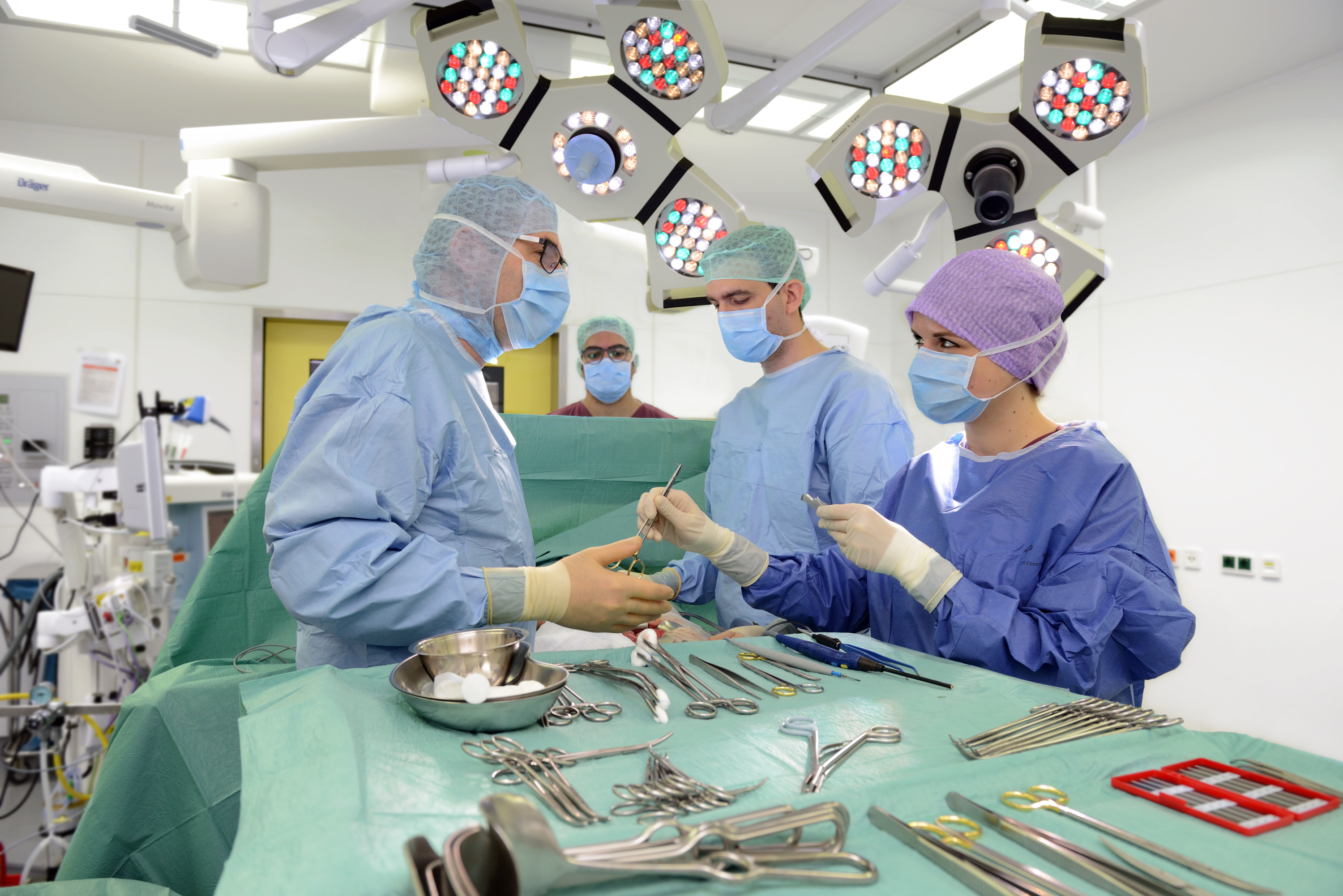
The LMU Klinikum is one of the largest and most research-intensive medical centers in Europe. Our patients benefit directly from this. Our top priority is patient safety, which we are continuously developing through targeted measures. Only by systematically coordinating many individual components can we achieve our goal: the safest and most effective treatment that medicine can provide today. Our patient safety measures include, among other things
- Critical Incident Reporting System (CIRS): reported "near-miss incidents" are evaluated here in order to develop improvement measures quickly and directly.
- Central sterile supply: We have rebuilt this and brought it up to the latest technical standards.
- Hospital hygiene: this is one of the primary prerequisites for a speedy recovery and is a consistent focus for us.
- Quality management: our QM system is constantly being expanded.
Future-oriented by tradition
We make medicine for our patients. We are and remain traditionally committed to this promise. To this end, we are also keeping pace with developments in modern medicine with further construction and structural developments.
We took a major step into the future in September 2014. With the opening of the new surgical center at the Großhadern campus, 32 state-of-the-art operating theatres went into operation. Together with the new Central Emergency Department, the Outpatient Surgery Center and the Central Sterile Supply Department, the new building forms the surgical and logistical backbone of the surgical disciplines at LMU Klinikum.
The portal clinic currently under construction will contribute to the strengthening of high-quality medical care close to the center of Munich. It is currently being built next to the nucleus of Munich's university medicine, the Medical Clinic building in Ziemssenstrasse with its 200-year history.
The "New Hauner" will continue the tradition of the Dr. von Hauner Children's Hospital, which has existed since 1846, as a center for obstetrics, pediatrics and adolescent medicine. A new, ultra-modern workplace is also being created here for researchers.