Research at the LMU Clinic
The clinics and institutes of the LMU University Hospital Munich are competence centers for medical clinical research and occupy an outstanding position in national and international comparison.
In addition to their high level of commitment to patient care, the doctors at the hospital are intensively involved in research with the aim of better understanding the development of diseases, finding new diagnostic procedures, discovering new drugs and non-drug therapies and developing new strategies for the prevention of diseases. Research at the hospital is committed to two principles: scientific excellence and the principles of good scientific practice.
At both the Grosshadern and City Center campuses, doctors and scientists work together in interdisciplinary, national and international collaboration to develop new diagnostic and treatment methods. From day one, students of human medicine and dentistry are introduced to the ideal of the "clinician scientist", who unites the healthcare provider with the researcher. The Munich Clinician Scientist Program (MCSP) of the Faculty of Medicine supports doctors who want to combine scientific and clinical work in the long term.
Fact Sheet Research
The clinics and institutes of the University Hospital are centers of competence for medical research and are higly ranked. There is a particular emphasis on cooperation - interdiciplinary, nationally and internationally.

Research at the site
From basic research to clinical application at the patient's bedside - at one of the most prominent research locations in Germany, this is lived practice. The clinical research facilities of the hospital and the institutes of the Faculty of Medicine complement each other perfectly.

Clinical studies
Clinical studies are the basis for the further development of therapeutic and diagnostic options. Their aim is usually to evaluate or optimize new forms of therapy. In clinical trials, patients benefit directly from the findings of state-of-the-art medicine.
Compliance
Policy of the University of Munich Medical Center on Financial Conflicts of Interest for Grants from the US Public Health Service (PHS) Agencies and the National Science Foundation (NSF)
Current clinical studies (selection)
Improving therapy for patients with acute coronary syndrome
The aim of the study is to adapt the previously standardized treatment of ACS patients to the individual circumstances of those affected in order to achieve the best possible risk reduction for bleeding and thrombotic complications in equal measure. It is therefore about improved treatment options and individualized therapy with already approved drugs.
PD Dr. med. Dirk Sibbing, FESC
Senior Physician, Cardiology Medical Clinic and Polyclinic I
ALLIANCE study: Asthma research in young patients with wheezing or wheezing breathing
Bronchial asthma and wheezing are the most common lung diseases in children and adolescents. In the majority of children, the symptoms disappear almost completely - but some children develop permanent asthma. The ALLIANCE study aims to gain a better understanding of the development of wheeze and asthma in children.
The ALLIANCE study was launched in 2013 to investigate the course, phenotypes and underlying pathomechanisms of asthma in childhood and adulthood(www.dzl.de/alliance). It is funded by the Federal Ministry of Education and Research and now includes more than 1000 patients and healthy volunteers aged between six months and 84 years.
Children with an increased risk of developing asthma are currently included
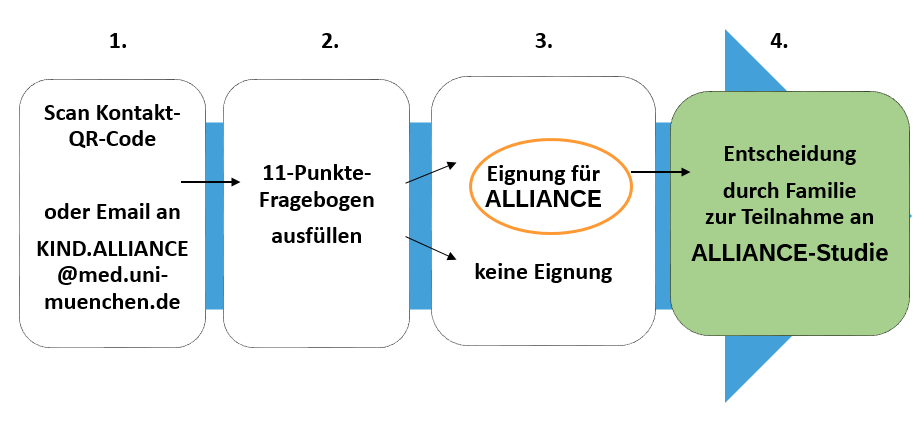
Each family can determine whether this is the case for a child: The 11-item questionnaire can indicate a later risk of developing asthma. The 11-item questionnaire is anonymous and only takes a few minutes to complete.
Families with children under 6 years of agecan take part in the 11-point questionnaire if
- the child has had two or more episodes of wheezing or wheezing breathing in the last 12 months and
- the child was born mature (> 37 weeks gestation)
- and has no cystic fibrosis or other serious chronic illness.
Procedure after completing the questionnaire
If the questionnaire determines suitability for participation in the ALLIANCE study, the families can decide whether to take part in the study. If you are interested in taking part in the study, we will ask for your contact details, provide non-binding information about everything to do with the study and, if necessary, arrange a study appointment.
As part of the ALLIANCE study, extensive lung function tests and detailed examinations are carried out, some of which go beyond the routine examinations carried out by a lung specialist.
Course of the ALLIANCE study
- 1 visit per year up to the age of 6 (at Lindwurmstr. 4)
- From the age of 6, 1 visit every 3 years, with an annual telephone interview in between
- At each visit:
- Medical examination
- Extensive lung function tests (possible from the age of approx. 4 years)
- Swabs from nose and throat
- Allergy test and questionnaire.
The results of the allergy test, blood count and lung function tests are made available to the treating doctor on request.

To receive a questionnaire families send an e-mail to: KIND.ALLIANCE@med.uni-muenchen.de or scan the contact code:
Alliance contact at the Munich site
Dr. von Hauner Children's Hospital
Department of Allergology in the "Christiane Herzog Outpatient Clinic"
Lindwurmstr. 4
80337 Munich
Phone: 089 4400-57736
Mobile: 0152 549 243 17
E-Mail: KIND.ALLIANCE@med.uni-muenchen.de
If you are interested or have any questions, please contact
Ricarda Stössel and Nicola Korherr
Ricarda.stoessel@med.uni-muenchen.de
089 4400-57993
Nicola.korherr@med.uni-muenchen.de
089 4400 57736
Further information can be found at www.dzl.de/alliance
Alzheimer-21: Studies on Alzheimer's dementia in people with Down syndrome
People with trisomy 21 face many challenges throughout their lives. Thanks to numerous socio-political and medical advances in recent decades, many people with trisomy 21 are now able to lead independent and self-determined lives. This makes it all the more dramatic that these people are at a high risk of suffering from severe memory disorders in old age. The reason for this lies in a special feature of chromosome 21, which contains a gene that is important in Alzheimer's disease, the amyloid precursor protein (APP) gene. Due to the threefold occurrence of this gene, people with Down syndrome can develop severe memory disorders after the age of 30, which are very similar to Alzheimer's disease. The development of memory disorders in patients with trisomy 21 is often accompanied by behavioral disorders and in many cases destroys years of hard-won autonomy. When this happens, the relatives who have otherwise taken over the care often reach their limits.
However, behavioral abnormalities in people with a trisomy 21 are by no means proof of the development of dementia. Rather, numerous other diseases, some of which are easily treatable, can lead to changes in everyday behavior. For example, in addition to visual and hearing disorders, metabolic disorders such as hypothyroidism or night-time sleep disturbances can also be considered. We offer a wide range of examination methods in our specialist outpatient clinic to ensure the diagnosis of Alzheimer's dementia. Our aim is to identify treatable causes of behavioral abnormalities. In addition, we would like to provide patients and their relatives with advice in the event of Alzheimer's dementia. However, the services offered by our outpatient clinic cannot and should not replace regular care by a general practitioner or specialist.
Mrs. Smrzka, Nina
Biomarker study of familial Alzheimer's dementia (DIAN)
DIAN (Dominantly Inherited Alzheimer Network) stands for the international network for the study of the familial form of Alzheimer's disease. It was founded in the USA to improve research into the genetic forms of Alzheimer's disease and now has locations all over the world. One of the two German study centers (in addition to Tübingen) was established at the German Center for Neurodegenerative Diseases in Munich (DZNE) in close cooperation with the Neurological Clinic of the LMU, Campus Großhadern.
Peaches study
Does childhood obesity begin in the womb? An obesity risk screening for newborns.
Study on the physical and psychological effects of the Covid-19 pandemic on people in need of care, as well as effects on their caregivers, caregiving relatives and general practitioners
After more than a year of the global Covid-19 pandemic, it is clear that people in need of care, their family carers, nursing staff and GPs are particularly affected by the disease itself, but also by the measures adopted. What helps to provide good physical and mental care for those in need of care? What do their carers, relatives and GPs need?
The Bavarian State Ministry of Health and Care has initiated BACOM to improve the lives of people in need of care during the current pandemic. BaCoM is a joint project that combines expertise from general medicine, infectiology, nursing science and sociology at three locations in Munich (LMU and Catholic University of Applied Sciences Munich), Erlangen (FAU) and Würzburg (UKW).
Those in need of care are informed and educated by their family doctor and invited to participate. The examinations and interviews themselves are carried out by trained study staff. In addition, the nursing staff, relatives and GPs who care for those affected will be asked about their physical and emotional needs during the pandemic, as well as the structural conditions in the care facilities and households in which they care for those in need of care. The study is scheduled to run for a period of three years with six-monthly follow-up surveys to ensure that the long-term consequences of the Covid-19 pandemic for all stakeholders can also be well mapped.
Participation in the study
If you have been diagnosed with Sars-CoV-2 in the last 6 months and you have been classified in a care degree (I-V), please contact the address below. You are also welcome to contact your family doctor, relative or care professional.
Contact and information
Study team BaCoM
Institute for General Practice
This placebo-controlled study is investigating the efficacy of the short- and long-term use of a drug that has been approved for over 40 years for the prevention of respiratory tract infections (RTIs) in young children with whistling lower respiratory tract infection (wLRI).
The BEAR study (Broncho-Vaxom-Efficacy Assessment in Respiratory tract infections) is currently enrolling participants.
Who can take part in the study?
- Your child is between the ages of 6 months and 1 year and has had at least 2 respiratory tract infections (RTI) in the last 6 months
- At least one of these episodes was associated with wheezing/lower respiratory tract irritation (wLRI) leading to a hospital/doctor visit
OR
- Your child is between the ages of 1 and 5 years and has had at least 4 respiratory infections in the last 12 months, 2 of which have been associated with wheezing/lower respiratory tract infections that have resulted in a doctor's visit or hospitalization
AND
- The child has not received systemic steroids (tablet, suppository or infusion) in the 4 weeks prior to study inclusion - inhaled corticosteroids (ICS) are allowed
The study team will discuss further criteria with you if you are interested in taking part in the BEAR study with your child.
As part of this study, your child's health will be monitored more frequently and he/she will have frequent contact with a study doctor. The study medication, examinations and medical care required as part of the study will be provided to your child free of charge.
Elisabeth Strauss
Dr. von Hauner Children's Hospital / Christiane Herzog Outpatient Clinic Department of Asthma and Allergies AG Prof. Erika von Mutius
Chart study
Description of the study: Comparison of 6% hydroxyethyl starch and 5% human albumin for volume replacement therapy in patients with bladder removal (cystectomy).
Study objective
Primary: To compare the effects of human albumin (HA) and hydroxyethyl starch (HES) - used in perioperative volume replacement therapy - on renal function in patients undergoing cystectomy with the aim of demonstrating the superiority of HA over HES
Secondary: To investigate the influence of HA or HES on other laboratory and clinical parameters, hospital and intensive care stay, acute kidney injury and pruritus.
Mr. Prof. Dr. Rehm, Markus
Clinic for Anaesthesiology
Therapy improvement for patients with acute coronary syndrome
The aim of the study is to adapt the previously standardized treatment of ACS patients to the individual circumstances of those affected in order to achieve the best possible risk reduction for bleeding and thrombotic complications in equal measure. It is therefore about improved treatment options and individualized therapy with already approved drugs.
PD Dr. med. Dirk Sibbing, FESC
Senior physician, Cardiology Medical Clinic and Polyclinic I
Study for patients with spinal muscular atrophy (SMA)
Patient survey: Effects of spinal muscular atrophies on the life situation of patients and their environment
In the CDP study, we are using new, very safe, non-invasive examinations (i.e. without penetrating the body) to investigate the brain and the retina of the eye in order to better understand the structures and functions of the central nervous system in mental illnesses. This will enable us to better recognize disease patterns and manifestations in order to better understand disease mechanisms and help develop more effective therapies for our patients. By taking part, you are making an important scientific contribution!
The LMU Clinic's COVID-19 registry (CORKUM) collects clinical data and biomaterials from COVID-19 patients at the clinic. These data and biosamples are made available to various research projects within and outside the hospital. By gaining a better understanding of the infection, the immune response and the course of the disease, we hope to be able to better combat COVID-19 and treat patients more effectively in the future. As a central research platform, CORKUM enables powerful, efficient and dynamic research into COVID-19 at LMU University Hospital, the Faculty of Medicine and beyond.
Collaborations
Cooperation and collaboration is an essential part of research into COVID-19. CORKUM works with numerous projects and research associations at national and international level. The highest data protection standards apply to every collaboration and use of data.
Publications (selection)
Vascular neutrophilic inflammation and immunothrombosis distinguish severe COVID-19 from influenza pneumonia https://pubmed.ncbi.nlm.nih.gov/33217134/
Liver function test abnormalities at hospital admission are associated with severe course of SARS-CoV-2 infection: a prospective cohort study https://pubmed.ncbi.nlm.nih.gov/33514597/
Dynamics of SARS-CoV-2 shedding in the respiratory depends on the severity of disease in COVID-19 patients https://pubmed.ncbi.nlm.nih.gov/33602859/
Protective immune trajectories in early viral containment of non-pneumonic SARS-CoV-2 infection https://www.biorxiv.org/content/10.1101/2021.02.03.429351v1
Myocardial inflammation and dysfunction in COVID-19-associated myocardial injury https://www.ahajournals.org/doi/10.1161/CIRCIMAGING.120.011713
Emergence of multiple SARS-CoV-2 mutations in an immunocompromised host https://www.medrxiv.org/content/10.1101/2021.01.10.20248871v1
Left and right ventricular dysfunction in patients with COVID-19-associated myocardial injury https://pubmed.ncbi.nlm.nih.gov/33515390/
Further information
In the lecture of 23.2.2021 of the virtual lecture series "Corona Lectures" of the LMU, Dr. Johannes C. Hellmuth explained the intention of CORKUM and the importance of the National Pandemic Cohort Network (NAPKON): https://www.lmu.de/de/studium/studienangebot/uni-fuer-alle/corona-lectures/index.html
Doctors and scientists at LMU Hospital or the Faculty of Medicine can find further information in the research portal: https://forschungsportal.med.uni-muenchen.de/corkum/ (link only accessible in university or hospital networks: MedVer, WiFo, VPN)
Depression is an illness that affects the thoughts, feelings and actions of those affected and can be associated with considerable suffering. Good and effective treatment options are already available in the form of medication, psychotherapy and other biological therapies (e.g. non-invasive brain stimulation). Nevertheless, not every treatment is equally suitable or available in a timely manner for everyone affected. Multiple therapy attempts are often required before an effective approach can be found.
We are therefore pursuing two main goals with our research projects:
- We want to improve the effectiveness of existing forms of therapy and expand the current range of treatments for people with depression to include new innovative procedures.
- We want to gain a better understanding of which therapy is helpful for which person so that in future we can provide individual advice and treatment early on in the course of the illness and thus prevent longer phases of illness or chronic illness.
Such medical advancements are of course not possible without the involvement of study participants. For many patients, participating in a trial is a promising opportunity to start treatment without long waiting times and/or to learn about treatments that are not yet available in standard care. You can find an overview of our current study offers and a contact form for registration here.
Alzheimer-21: Studies on Alzheimer's dementia in people with Down syndrome
People with trisomy 21 face many challenges throughout their lives. Thanks to numerous socio-political and medical advances in recent decades, many people with trisomy 21 are now able to lead independent and self-determined lives. This makes it all the more dramatic that these people are at a high risk of suffering from severe memory disorders in old age. The reason for this lies in a special feature of chromosome 21, which contains a gene that is important in Alzheimer's disease, the amyloid precursor protein (APP) gene. Due to the threefold occurrence of this gene, people with Down syndrome can develop severe memory disorders after the age of 30, which are very similar to Alzheimer's disease. The development of memory disorders in patients with trisomy 21 is often accompanied by behavioral disorders and in many cases destroys years of hard-won autonomy. When this happens, relatives who have otherwise taken over the care often reach their limits.
However, behavioral abnormalities in people with trisomy 21 are by no means proof of the development of dementia. Rather, numerous other diseases, some of which are easily treatable, can lead to changes in everyday behavior. For example, in addition to visual and hearing disorders, metabolic disorders such as hypothyroidism or night-time sleep disturbances can also be considered. We offer a wide range of examination methods in our specialist outpatient clinic to ensure the diagnosis of Alzheimer's dementia. Our aim is to identify treatable causes of behavioral abnormalities. In addition, we would like to provide patients and their relatives with advice in the event of Alzheimer's dementia. However, the services offered by our outpatient clinic cannot and should not replace regular care by a general practitioner or specialist.
Study to investigate the clinical course of dysferlinopathies
This study is aimed at patients with a genetically confirmed diagnosis of dysferlinopathy. This includes the most common manifestations such as limb-girdle muscular dystrophy type 2B (LGMD2B) and Miyoshi myopathy (MM), but also all other clinical manifestations associated with genetic defects in the "dysferlin" gene.
Proteus Study
What do we want to achieve with this project?
The best nutrition for babies is breast milk. However, breastfeeding is not always possible and infant formula (industrial infant milk) must be used. Commercial infant formula is of good quality. With the Proteus project, we want to try to improve this quality even further. In recent years, it has been shown that the protein composition of infant formula in particular can still be improved. With this study, we are investigating whether infant formula with a lower protein content is better than normal infant formula.
What is being done?
The Proteus study can be started from birth until 45 days after birth and continues until 6 months of age. During this time, you would come to Dr. von Hauner Children's Hospital three times. During these visits, your child's height, weight and body fat percentage will be measured, among other things.
There are three study groups: one of the three groups will be the breastfed comparison group, the other two groups will receive the study milk. The study milk is a normal infant formula or an infant formula with a lower protein content. A random draw is made to determine which of the two study milks your child will receive (randomization). The researchers have no influence on the result of the randomization (double-blind).
Who can take part?
All children up to the age of 45 days who are either fully breastfed or have already been fully weaned can take part. The children should be born between the 37th and 42nd week of pregnancy and not be twins/ multiples.
Would you like more information or would you like to take part in the study? You are welcome to contact us at
or call us on 089/4400 -57767 /-57707 /-53486.
The study team can give you more information and answer your questions. You can then decide whether you would like to take part in the study.
Biomarker study of familial Alzheimer's dementia (DIAN)
DIAN (Dominantly Inherited Alzheimer Network) stands for the international network for the study of the familial form of Alzheimer's disease. It was founded in the USA to improve research into the genetic forms of Alzheimer's disease and now has locations all over the world. One of the two German study centers (in addition to Tübingen) was established at the German Center for Neurodegenerative Diseases in Munich (DZNE) in close cooperation with the Neurological Clinic of the LMU, Campus Großhadern.
FTLD Consortium & DESCRIBE-FTD
Studies on the spectrum of frontotemporal lobar degeneration
The term frontotemporal lobar degeneration (FTLD) covers a spectrum of neurodegenerative diseases that predominantly affect the frontal and temporal lobes of the brain. Initially, the term Pick's disease was coined for this group of diseases, but the name and classification of frontotemporal lobar degeneration has been repeatedly changed and hotly debated. We currently summarize the following diseases under the FTLD spectrum:
- Frontotemporal dementia (FTD) as a behavioral variant,
- primary non-fluent aphasia (PNFA) and
- semantic dementia (SD) as linguistic variants,
- amyotrophic lateral sclerosis with frontotemporal dementia (ALS+FTD),
- corticobasal syndrome (CBS) and
- progressive supranuclear palsy (PSP).
Frontotemporal dementia (FTD) can lead to changes in language and behavior as well as memory impairment. The aim of the FTLD consortium and the DESCRIBE-FTD study is to describe the course of FTD in its various clinical manifestations in detail, to gain a better understanding of the underlying pathology and to identify parameters that enable diagnosis and prediction of the course of the disease. This should lead to a better understanding of the causes of the disease in the long term and create the conditions for more efficient and earlier therapies.
More information:
Mrs. Smrzka, Nina
GENFI Study
The Genetic Frontotemporal dementia Initiative (GENFI) is a collaboration of numerous research centers in Europe and Canada with a common interest in familial frontotemporal dementia (FTD). The coordinator is Dr. Jonathan Rohrer in London. The study aims to gain a better understanding of hereditary FTD, particularly when caused by mutations in the genes for progranulin (GRN), for the tau protein (MAPT) and in c9orf72. There are already promising therapeutic approaches for the treatment of these diseases, but many questions, such as the exact course of the disease and its measurement or the best time to start treatment, still need to be answered.
More information:
Mrs. Smrzka, Nina
Study to investigate the clinical course of dysferlinopathies
This study is aimed at patients with a genetically confirmed diagnosis of dysferlinopathy. This includes the most common manifestations such as limb-girdle muscular dystrophy type 2B (LGMD2B) and Miyoshi myopathy (MM), but also all other clinical manifestations associated with genetic defects in the "dysferlin" gene.
about the study
Study to investigate the clinical course of dysferlinopathies
DIAN (Dominantly Inherited Alzheimer Network) stands for the international network for the study of the familial form of Alzheimer's disease. It was founded in the USA to improve research into the genetic forms of Alzheimer's disease and now has locations all over the world. One of the two German study centers (in addition to Tübingen) was established at the German Center for Neurodegenerative Diseases in Munich (DZNE) in close cooperation with the Neurological Clinic of the LMU, Campus Großhadern.
Study to investigate the clinical course of dysferlinopathies
This study is aimed at patients with a genetically confirmed diagnosis of dysferlinopathy. This includes the most common manifestations such as limb-girdle muscular dystrophy type 2B (LGMD2B) and Miyoshi myopathy (MM), but also all other clinical manifestations associated with genetic defects in the "dysferlin" gene.
Introvision for migraine and headaches
IntroMig: randomized waiting list control study with non-drug treatment
A study on the effectiveness of Introvision in patients with migraine is being conducted at the Neurology Clinic of the University of Munich (Großhadern Campus) in collaboration with the University of Hamburg. Introvision according to Prof. Angelika C. Wagner (University of Hamburg) is a method of emotional self-regulation that uses a specially developed perception technique (Konstatierendes Aufmerksames Wahrnehmen: KAW). As migraine patients have impaired stimulus processing (reduced habituation), Introvision could be particularly effective here, and not only due to the lasting reduction in stress.
Migraine sufferers with at least 5 headache days per month up to chronic migraine can participate and are asked to keep a headache calendar for approx. 6 months and not to change their preventive medication and non-drug measures.
Study participants then learn the KAW perception technique and the theoretical background of Introvision in six two-hour courses with video support from Hamburg. This is followed by three individual sessions via video conference. The waiting list group only starts attending the course six weeks later. The primary endpoint is the change in headache days 3 months after Introvision compared to the waiting list group before course participation. Patients are currently being recruited.
Link to the flyer Migraine Study
Please contact Dr. Monika Empl
More information:
OPTIMISTIC: Observational study on myotonic dystrophy type I
European observational study on myotonic dystrophy type I ("Observational Prolonged Trial In Myotonic Dystrophy type I to Improve Stamina,
a Target Identification Collaboration", OPTIMISTIC)
OPTIMISTIC: Observational study on myotonic dystrophy type I
European observational study on myotonic dystrophy type I ("Observational Prolonged Trial In Myotonic Dystrophy type I to Improve Stamina,
a Target Identification Collaboration", OPTIMISTIC)
Does childhood obesity begin in the womb? An obesity risk screening for newborns.
After discharge from an intensive care unit, around 1/3 of the patients treated there suffer from post-traumatic stress. There is currently a gap in care for these patients: Only a few are correctly diagnosed and professionally treated for this post-traumatic stress disorder - the majority of those affected receive no professional help and are often impaired in their everyday lives. By involving GPs, the PICTURE study aims to improve the care of these patients with a new trauma-focused narrative therapy (NET) specially developed for GP practices.
The DFG study on post-traumatic stress after intensive medical care "PICTURE - PTSD after ICU Survival, Caring for Patients with Traumatic Stress Sequelae following Intensive Medical Care" began in 2018. It is being conducted at the LMU Klinikum Munich and Charité Berlin study sites. New patients will be included in the study until the end of 2021. Long-term therapeutic effects of the treatment will be observed and tested.
Participation in the study is possible if:
- an intensive care unit stay has taken place within the last 2 years
- with artificial respiration (even for a short time)
- emotional and psychological stress caused by these experiences persists
- the patients are between 18-85 years old
- no (trauma) psychotherapy is currently being received
Procedure and scope:
Participation in the study enables patients to undergo a structured, comprehensive diagnosis of psychological stress and provides them with improved care and brief psychosomatic treatment from their trusted GP.
In an initial preliminary telephone consultation, we clarify the individual participation criteria and the suitability of the treatment offered and required. The next step is a comprehensive initial examination and standardized diagnostics. If the inclusion criteria are also met here, the GP practice is contacted by our study team in order to participate in the study together with the patient and provide further care.
Randomized controlled trial:
The patient will be treated with either "enhanced standard care" (3 visits with distress-specific guideline treatment) or "Narrative Exposure Therapy" (NET, a trauma therapeutic. Narrative Exposure Therapy" (NET, a trauma-therapeutic treatment approach tailored to the GP setting, 3 sessions (30-45 minutes) according to a structured therapy scheme) and accompanying trauma monitoring with 7 short telephone visits by MFA).
Narrative exposure therapy (NET):
This treatment method was developed by psychotherapists at the University of Konstanz as a trauma therapy and was shortened and adapted for use with GPs. This brief GP intervention does not replace full-fledged trauma therapy, but offers a treatment approach that may already be sufficient for milder stresses or can act as a bridge until psychotherapy begins. It includes
- Standardized examination of the psychological stress
- Clarification of the clinical picture
- Classification of formative events along the lifeline
- Structured retelling of the stressful experiences
The integration of memories into the situation at the time and the past has been proven to reduce psychological and emotional stress. Memory contents that could not be linked together during the trauma situation are subsequently connected through the retelling.
Participating GPs and their medical assistants are trained by us and conduct 3 sessions (approx. 45 minutes each) with the patients within 2 months. Accompanying short telephone visits by the MFA (every 2-3 weeks) record the development of the stress symptoms and increase the safety of the therapy.
Contact & information
We are happy to provide interested patients and general practitioners with further information and plan the treatment.
Munich study team
Prof. Dr. Jochen Gensichen (Study director)
LMU Hospital, Institute for General Medicine
Berlin study team
Dr. Konrad Schmidt (Site Director)
Charité Berlin, Institute of General Medicine
Study for patients with spinal muscular atrophy (SMA)
Patient survey: Effects of spinal muscular atrophies on the life situation of patients and their environment
Proteus Study
What do we want to achieve with this project?
The best nutrition for babies is breast milk. However, breastfeeding is not always possible and infant formula (industrial infant milk) must be used. Commercial infant formula is of good quality. With the Proteus project, we want to try to improve this quality even further. In recent years, it has been shown that the protein composition of infant formula in particular can still be improved. With this study, we are investigating whether infant formula with a lower protein content is better than normal infant formula.
What is being done?
The Proteus study can be started from birth until 45 days after birth and continues until 6 months of age. During this time, you would come to Dr. von Hauner Children's Hospital three times. During these visits, your child's height, weight and body fat percentage will be measured, among other things.
There are three study groups: one of the three groups will be the breastfed comparison group, the other two groups will receive the study milk. The study milk is a normal infant formula or an infant formula with a lower protein content. A random draw is made to determine which of the two study milks your child will receive (randomization). The researchers have no influence on the result of the randomization (double-blind).
Who can take part?
All children up to the age of 45 days who are either fully breastfed or have already been fully weaned can take part. The children should be born between the 37th and 42nd week of pregnancy and not be twins/ multiples.
Would you like more information or would you like to take part in the study? You are welcome to contact us at
or call us on 089/4400 -57767 /-57707 /-53486.
The study team can give you more information and answer your questions. You can then decide whether you would like to take part in the study.
Info sheet on the Porteus Study
Study on monitoring mental health in the workplace
The COVID-19 pandemic has shown how severely crises can affect the mental health of healthcare workers. In order to keep a better eye on these stresses in the future, the S.A.M. app is being tested as part of a study with employees of the LMU Clinic as an everyday tool for monitoring mental health in everyday working life.
At the same time, the app provides participants with feedback on the classification of their individual results and - if necessary - information on possible support services. S.A.M. is deliberately aimed at all professional groups at the LMU Clinic.
Schizophrenia is often characterized by altered brain activity. This can lead to impaired drive and mood, which is referred to as negative symptoms.
Brain stimulation techniques are seen as a promising treatment for these negative symptoms. In this new study, repetitive transcranial magnetic stimulation (rTMS) and intermittent theta burst stimulation (iTBS) are used.
FTLD Consortium & DESCRIBE-FTD
Studies on the spectrum of frontotemporal lobar degeneration
The term frontotemporal lobar degeneration (FTLD) covers a spectrum of neurodegenerative diseases that predominantly affect the frontal and temporal lobes of the brain. Initially, the term Pick's disease was coined for this group of diseases, but the name and classification of frontotemporal lobar degeneration has been repeatedly changed and hotly debated. We currently summarize the following diseases under the FTLD spectrum:
- Frontotemporal dementia (FTD) as a behavioral variant,
- primary non-fluent aphasia (PNFA) and
- semantic dementia (SD) as linguistic variants,
- amyotrophic lateral sclerosis with frontotemporal dementia (ALS+FTD),
- corticobasal syndrome (CBS) and
- progressive supranuclear palsy (PSP).
Frontotemporal dementia (FTD) can lead to changes in language and behavior as well as memory impairment. The aim of the FTLD consortium and the DESCRIBE-FTD study is to describe the course of FTD in its various clinical manifestations in detail, to gain a better understanding of the underlying pathology and to identify parameters that enable diagnosis and prediction of the course of the disease. This should lead to a better understanding of the causes of the disease in the long term and create the conditions for more efficient and earlier therapies.
GENFI study
The Genetic Frontotemporal dementia Initiative (GENFI) is a collaboration of numerous research centers in Europe and Canada with a common interest in familial frontotemporal dementia (FTD). The coordinator is Dr. Jonathan Rohrer in London. The study aims to gain a better understanding of hereditary FTD, particularly when caused by mutations in the genes for progranulin (GRN), for the tau protein (MAPT) and in c9orf72. There are already promising therapeutic approaches for the treatment of these diseases, but many questions, such as the exact course of the disease and its measurement or the best time to start treatment, still need to be answered.
Study Center
The DSGZ study center supports scientists in clinical research including design, biometrics (in close cooperation with the IBE), data management, regulatory compliance (in cooperation with the CSCLMU), insurance, training, funding. It offers infrastructure such as study assistance, quality management, electronic data capture (via eCRF), trial management system (TrackDB), contact to trial sites with experience in clinical vestibular research.
The DSGZ study center is also open to cooperation with institutions outside the DSGZ, for which, however, the CSCLMU should be the first point of contact within the KUM (Klinikum der Universität München).
Study for patients with spinal muscular atrophy (SMA)
Patient survey: Effects of spinal muscular atrophies on the life situation of patients and their environment

What is it about?
BEARR is a breastfeeding project that investigates the positive influence of breastfeeding on overweight mothers and their babies. It is known that women who are overweight not only have an increased risk of metabolic diseases (e.g. type 2 diabetes mellitus), but also have more difficulties breastfeeding.
We at BEARR want to find out how you and your baby can benefit from intensified breastfeeding advice! How can we provide you with the best possible breastfeeding support? How does your sugar metabolism and your baby's weight develop in the first 6 months?
Help us uncover how breastfeeding promotes the health of mother and child!
What can you expect?
- The opportunity to be supported by a personal breastfeeding consultant in the first 5 months
- Information about your sugar metabolism shortly before the birth and a maternal health check six months after the birth
- Assessment of your child's weight development using the U booklet
- Information material on breastfeeding
- Survey on personal breastfeeding experiences
You can take part as a pregnant woman over the age of 18 if:
- you had a body mass index (BMI) ≥ 30 kg/m² at the beginning of your pregnancy (e.g. weight ≥ 81.7 kg at a height of 1.65 m)
- You are not pregnant with multiples
- There is no premature birth
- You do not have type 1 diabetes mellitus
But: You can take part if you have been diagnosed with gestational diabetes!
Participation is completely free of charge for you!
Have we piqued your interest?
Then we look forward to hearing from you. You are welcome to contact us by phone or e-mail.
Phone: 089 4400 57967, Mobile: 0151 2573 7582
E-mail: bearr@med.uni-muenchen.de
Detailed information | Info flyer
The BEARR team
Prof. Dr. med. Regina Ensenauer and the BEARR team,
in cooperation with Prof. Dr. med. Hasbargen, Head of the Perinatal Center Großhadern
LMU Hospital, Goethestrasse 31, 80366 Munich
Study management: Prof. Dr. med. Regina Ensenauer
Study coordinator: Sabrina Antor, M.Sc. Nutritional Sciences
Therapy improvement for patients with acute coronary syndrome
The aim of the study is to adapt the previously standardized treatment of ACS patients to the individual circumstances of those affected in order to achieve the best possible risk reduction for bleeding and thrombotic complications in equal measure. It is therefore about improved treatment options and individualized therapy with already approved drugs.
PD Dr. med. Dirk Sibbing, FESC
Senior physician, Cardiology Medical Clinic and Polyclinic I
Alzheimer-21: Studies on Alzheimer's dementia in people with Down syndrome
People with trisomy 21 face many challenges throughout their lives. Thanks to numerous socio-political and medical advances in recent decades, many people with trisomy 21 are now able to lead independent and self-determined lives. This makes it all the more dramatic that these people are at a high risk of suffering from severe memory disorders in old age. The reason for this lies in a special feature of chromosome 21, which contains a gene that is important in Alzheimer's disease, the amyloid precursor protein (APP) gene. Due to the threefold occurrence of this gene, people with Down syndrome can develop severe memory disorders after the age of 30, which are very similar to Alzheimer's disease. The development of memory disorders in patients with trisomy 21 is often accompanied by behavioral disorders and in many cases destroys years of hard-won autonomy. When this happens, relatives who have otherwise taken over the care often reach their limits.
However, behavioral abnormalities in people with trisomy 21 are by no means proof of the development of dementia. Rather, numerous other diseases, some of which are easily treatable, can lead to changes in everyday behavior. For example, in addition to visual and hearing disorders, metabolic disorders such as hypothyroidism or night-time sleep disturbances can also be considered. We offer a wide range of examination methods in our specialist outpatient clinic to ensure the diagnosis of Alzheimer's dementia. Our aim is to identify treatable causes of behavioral abnormalities. In addition, we would like to provide patients and their relatives with advice in the event of Alzheimer's dementia. However, the services offered by our outpatient clinic cannot and should not replace regular care by a general practitioner or specialist.
OPTIMISTIC: Observational study on myotonic dystrophy type I
European Observational Prolonged Trial In Myotonic Dystrophy type I to Improve Stamina, a Target Identification Collaboration" (OPTIMISTIC)
We are looking for healthy control subjects to complete our short online personality questionnaire. We are a group of employees at the Clinic for Psychiatry and Psychotherapy at the LMU in Munich and at the University of Bonn who are looking for people interested in a study called "TYPIA". The study investigates the cognitive and psychological basis of schizophrenia.
For this we also need healthy control subjects, for which you might be suitable. The results of the study should help us to gain a better understanding of the development of schizophrenia in order to possibly develop more effective treatment options. We would therefore be very grateful if you could take some time (approx. 3 to 5 minutes) to complete the questionnaire.
Go to our homepage http://www.typia.de to get started!
We will be giving away 20 cash prizes worth €10 among all participants.
You also have the chance to take part in a further study in which you will receive an expense allowance of €80 + travel costs and - if you are interested - pictures of your brain.
Postcards Typia Study
Chart study
- Study description: Comparison of 6% hydroxyethyl starch and 5% human albumin for volume replacement therapy in patients undergoing bladder removal (cystectomy).
- Study objective: Primary: To compare the effects of human albumin (HA) and hydroxyethyl starch (HES) - used in perioperative volume replacement therapy - on renal function in patients undergoing cystectomy with the aim of demonstrating the superiority of HA over HES
- Secondary: Investigation of the influence of HA or HES on other laboratory and clinical parameters, hospital and intensive care stay, acute kidney injury and pruritus
- Contact: Department of Anaesthesiology Prof. Dr. Markus REHM E-mail: Markus.Rehm@med.uni-muenchen.de
FTLD Consortium & DESCRIBE-FTD
Studies on the spectrum of frontotemporal lobar degeneration
The term frontotemporal lobar degeneration (FTLD) covers a spectrum of neurodegenerative diseases that predominantly affect the frontal and temporal lobes of the brain. Initially, the term Pick's disease was coined for this group of diseases, but the name and classification of frontotemporal lobar degeneration has been repeatedly changed and hotly debated. We currently summarize the following diseases under the FTLD spectrum:
- Frontotemporal dementia (FTD) as a behavioral variant,
- primary non-fluent aphasia (PNFA) and
- semantic dementia (SD) as linguistic variants,
- amyotrophic lateral sclerosis with frontotemporal dementia (ALS+FTD),
- corticobasal syndrome (CBS) and
- progressive supranuclear palsy (PSP).
Frontotemporal dementia (FTD) can lead to changes in language and behavior as well as memory impairment. The aim of the FTLD consortium and the DESCRIBE-FTD study is to describe the course of FTD in its various clinical manifestations in detail, to gain a better understanding of the underlying pathology and to identify parameters that enable diagnosis and prediction of the course of the disease. This should lead to a better understanding of the causes of the disease in the long term and create the conditions for more efficient and earlier therapies.
GENFI study
The Genetic Frontotemporal dementia Initiative (GENFI) is a collaboration of numerous research centers in Europe and Canada with a common interest in familial frontotemporal dementia (FTD). The coordinator is Dr. Jonathan Rohrer in London. The study aims to gain a better understanding of hereditary FTD, particularly when caused by mutations in the genes for progranulin (GRN), for the tau protein (MAPT) and in c9orf72. There are already promising therapeutic approaches for the treatment of these diseases, but many questions, such as the exact course of the disease and its measurement or the best time to start treatment, still need to be answered.
Study Center
The DSGZ study center supports scientists in clinical research including design, biometrics (in close cooperation with the IBE), data management, regulatory compliance (in cooperation with the CSCLMU), insurance, training, funding. It offers infrastructure such as study assistance, quality management, electronic data capture (via eCRF), trial management system (TrackDB), contact to trial sites with experience in clinical vestibular research.
The DSGZ study center is also open to cooperation with institutions outside the DSGZ, for which, however, the CSCLMU should be the first point of contact within the KUM (Klinikum der Universität München).
Study Center
The DSGZ study center supports scientists in clinical research including design, biometrics (in close cooperation with the IBE), data management, regulatory compliance (in cooperation with the CSCLMU), insurance, training, funding. It offers infrastructure such as study assistance, quality management, electronic data capture (via eCRF), trial management system (TrackDB), contact to trial sites with experience in clinical vestibular research.
The DSGZ study center is also open to cooperation with institutions outside the DSGZ, for which, however, the CSCLMU should be the first point of contact within the KUM (Klinikum der Universität München).
Bruxism patients - Teeth grinding
The aim of the study is to test biofeedback splint therapy. The therapeutic approach with this splint is to treat bruxism and eliminate the consequences in addition to the actual tooth protection.
With the splint to be tested, the patient should subconsciously learn to refrain from grinding during sleep through biofeedback. The body is shown the incorrect behavior through feedback. This splint consists of an elastic plastic dental splint, lies on the teeth in the upper jaw and also covers the palate area. Waterproof electronic components are encapsulated in the splint, which provide feedback (biofeedback) in the event of incorrect behavior (grinding/clenching). The duration of grinding and the time of grinding are recorded.
The recruitment phase has been completed. No further interested parties can be admitted to the study.