Stress hormone cortisol

KLINIKUM aktuell: What is behind this technical term?
Prof. Dr. Martin Reincke : Cushing's syndrome (named after the US neurosurgeon Harvey Williams Cushing) refers to the typical consequences of persistent, inadequately increased production of the body's own cortisol, which we also call hypercortisolism. However, the most common cause of Cushing's syndrome is the intake of cortisone-containing medication. This form of Cushing's syndrome develops in patients who take long-term cortisone preparations due to rheumatic diseases or inflammatory bowel diseases, for example.
While exogenous Cushing's syndrome as a result of glucocorticoid therapy is common, endogenous Cushing's syndrome, where the cause is a tumor, is rare. The incidence is around one to five cases per 1,000,000 inhabitants per year. However, as the disease is associated with increased morbidity and mortality, it requires rapid and targeted diagnosis and treatment. Unfortunately, it usually takes three years for most patients with endogenous Cushing's syndrome to be correctly diagnosed. We have had our own special outpatient clinic for Cushing's syndrome for over ten years, the first in Germany at the time.
KLINIKUM aktuell: What is the effect of a permanently elevated cortisol level?
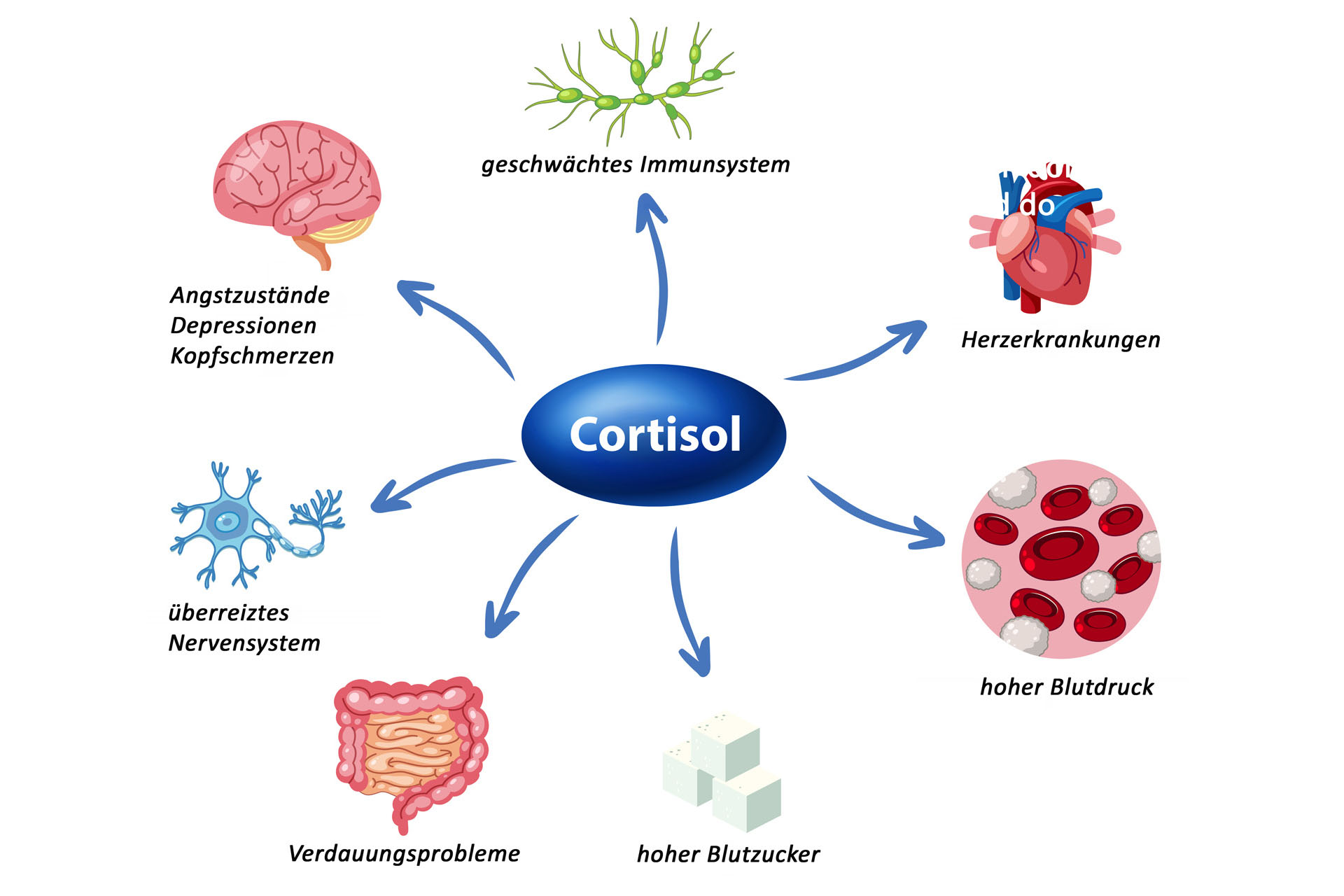
Dr. Elisabeth Nowak: The clinical picture of a permanently elevated cortisol level is complex and can manifest itself in high blood pressure, osteoporosis, depression, muscle weakness or diabetes mellitus, among other things. Typical signs also include a puffy face (also known as a "full moon face"), reddish-purple stripes on the skin, which can resemble stretch marks, and an increased accumulation of fat in the neck.
KLINIKUM aktuell: How do you measure cortisol?
Prof. Dr. Martin Reincke: It doesn't work with a blood sample alone, as the level changes throughout the day; it is always higher in the morning than in the evening. Cortisol can be measured in the blood, but also in urine and saliva. It is most meaningful if you collect data over several days - and only then evaluate it.
KLINIKUM aktuell: How can you regulate the release of cortisol in stressful times?
Dr. Elisabeth Nowak: If tension and relaxation are reasonably balanced, you don't really need to do anything. Otherwise, a balanced diet and exercise are helpful. Relaxation in the form of doing nothing doesn't have to be necessary; social contacts and exercise are much better for calming down.
KLINIKUM aktuell: What are you personally researching at the moment?
Dr. Elisabeth Nowak: I am leading a large multi-centre study that is investigating the socio-economic consequences for patients with Cushing's syndrome: an interim evaluation shows that many of those affected do not have a permanent employment relationship and are less likely to live in a partnership