press releases | 09/05/2025

Science Council recommends funding for the Center for Inflammation and Metabolism

A new Center for Inflammation and Metabolism (CIM) with a floor space of 2,558 m2 is to be built on the LMU Klinikum's Innenstadt campus
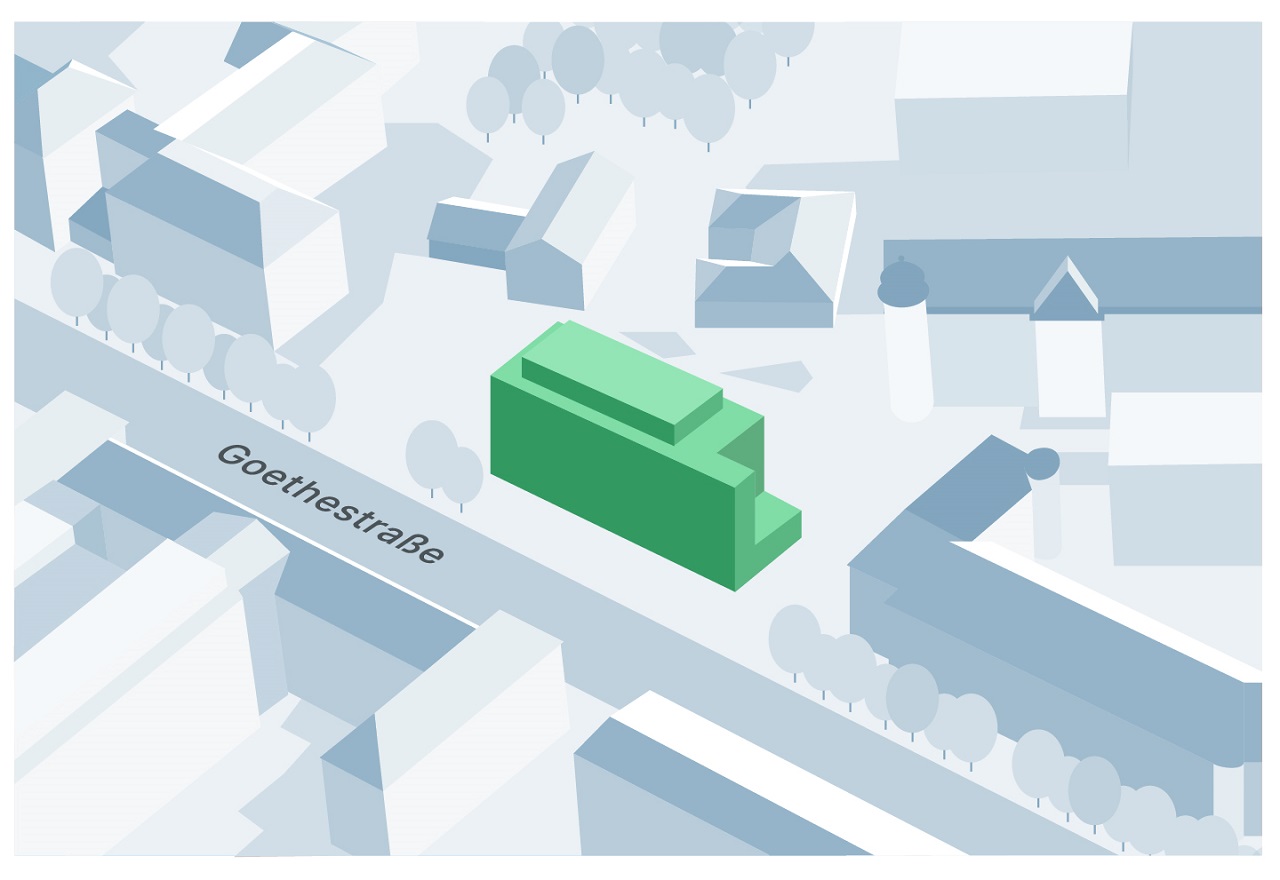
The German Council of Science and Humanities has recommended funding for the Center for Inflammation and Metabolism, CIM for short. Subject to the final decision of the Joint Science Conference (GWK), the new research building will be financed with 67.5 million euros, half of which will be provided by the federal government and half by the Free State of Bavaria. The building is to be constructed on Goethestrasse - and thus in the immediate vicinity of bed-carrying and outpatient healthcare facilities on the LMU Klinikum's inner city campus, which offers excellent interfaces to the surrounding research institutions with its modern infrastructure.
Visualization

"This direct proximity enables the working groups located at the CIM to interact closely with the clinical facilities in order to strengthen bidirectional, translational research approaches," says the spokesperson of the proposal, Prof. Dr. Hans-Joachim Anders (Medical Clinic and Polyclinic IV of the LMU Klinikum). The deputy spokespersons are the Director of the Medical Clinic and Polyclinic II of the LMU Klinikum, Prof. Dr. Julia Mayerle, and the Deputy Director and Site Director of the Inner City Campus of the Medical Clinic and Polyclinic III of the LMU Klinikum, Prof. Dr. Sebastian Theurich.

Confirmation of the research strength of LMU University Medicine

Bavaria's Minister of Science Markus Blume congratulates: "The cutting-edge research at LMU University Medicine is impressive: I am delighted that the Science Council has today recommended funding for a top-class research building for the CIM - impressive proof of the research strength and ambition of LMU University Medicine as a whole. After all, you don't get a research building for free, you have to work hard for it. The initiatives for the CIM impress with a combination of excellence, innovation and a clear goal: to fight diseases and cure people. Congratulations and many thanks to everyone involved."

"The concept is based on the excellence and international visibility of vascular research, inflammation research and endocrine metabolic research at LMU Munich," emphasizes Dean Prof. Dr. Thomas Gudermann. "Deciphering the underlying mechanisms of inflammatory-metabolic stress and developing innovative diagnostic, preventive and therapeutic strategies is a social challenge and a promising field of research for the coming decades."

For Prof. Dr. Markus M. Lerch, Medical Director and Chairman of the Board of LMU Klinikum, the approval is a signal for LMU Medicine as a whole: "We are very pleased with the decision of the Science Council. Especially as the CIM's research program represents a further development of LMU Medicine's well-established focus on inflammation and metabolism. Future investigations into the connection between these two research areas will be of international importance."

The research program of the CIM

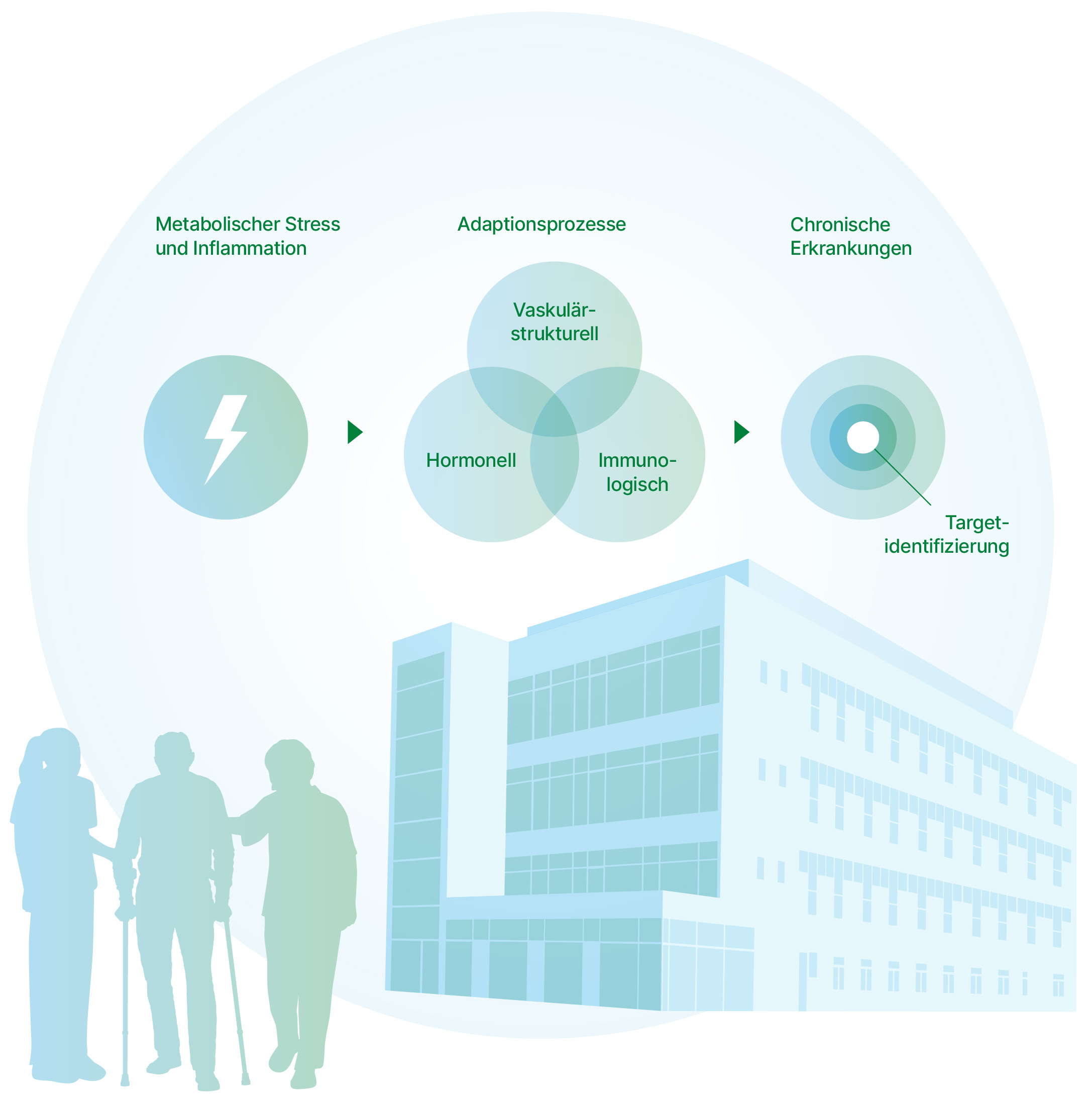
In recent decades, medicine has made great progress, primarily through specialization, for example in specific therapeutic interventions or the diagnosis, subclassification and treatment of rare diseases. On the other hand, there is an increasing multimorbidity of the ageing population and the growing realization that coinciding diseases do not exist independently of each other, but often have a common pathophysiological basis resulting from systemic adaptation processes. An established example is systemic inflammation caused by metabolic diseases, which links obesity, diabetes, vascular and organ diseases.

This is where the Center for Inflammation and Metabolism comes in: By researching the adaptation processes in inflammatory-metabolic stress, the aim is to develop new diagnostic, preventive and therapeutic approaches for multiple diseases or chronic common diseases. In contrast to specialist research, these adaptation processes are researched at the CIM on an interdisciplinary basis in order to develop the basis for innovative mechanism-based therapy for multimorbid patients and to overcome traditional disciplinary boundaries.

The decoding of complex disease interactions will benefit from the shared research infrastructure with the latest analysis platforms. Interdisciplinary teams will develop new findings and solutions in interdisciplinary projects and overcome the communication and integration hurdles caused by specialization. Pharmacological, nucleic acid-based and cell-based technologies will be researched as forward-looking therapeutic approaches.

Image without a title

Five years of construction

The CIM research building on the city center campus will have four floors and a basement with a usable area of 2,558 m2. The building structure, spatial planning and equipment of the CIM are designed to promote interdisciplinary collaboration on interdisciplinary research programs, while at the same time reflecting the CIM focus on cross-organ disease mechanisms and multimorbidity. Construction is scheduled to begin in 2026, with completion planned for 2030.

Science Council

The Science Council is the oldest science policy advisory body in Europe and was founded on September 5, 1957 in the Federal Republic of Germany by the federal and state governments on the basis of an administrative agreement. It advises the Federal Government and the governments of the Länder on all issues relating to the content and structural development of science, research and higher education.

Source: https://www.wissenschaftsrat.de/DE/Ueber-uns/Wissenschaftsrat


Joint Science Conference GWK

In the GWK, which was founded in 2008, the federal and state governments deal with all issues relating to science and research policy strategies, science funding and the science system that affect them jointly. The members of the GWK are the science ministers and the finance ministers of the federal and state governments. While maintaining their competencies, they strive for close coordination in the field of national, European and international science and research policy on issues that affect them both. In doing so, they pursue the goal of increasing the performance of Germany as a science and research location in international competition.

Source: Tasks | GWK Bonn

All LMU Hospital Press Releases

Contact person:

Prof. Dr. Hans-Joachim Anders

Nephrology Center, Medical Clinic IV, LMU Clinic

Dr. Dorothee Hodde

Deputy Head of Research Dean's Office, Medical Faculty of the Ludwig-Maximilians-Universität Munich

Originally translated with DeepL