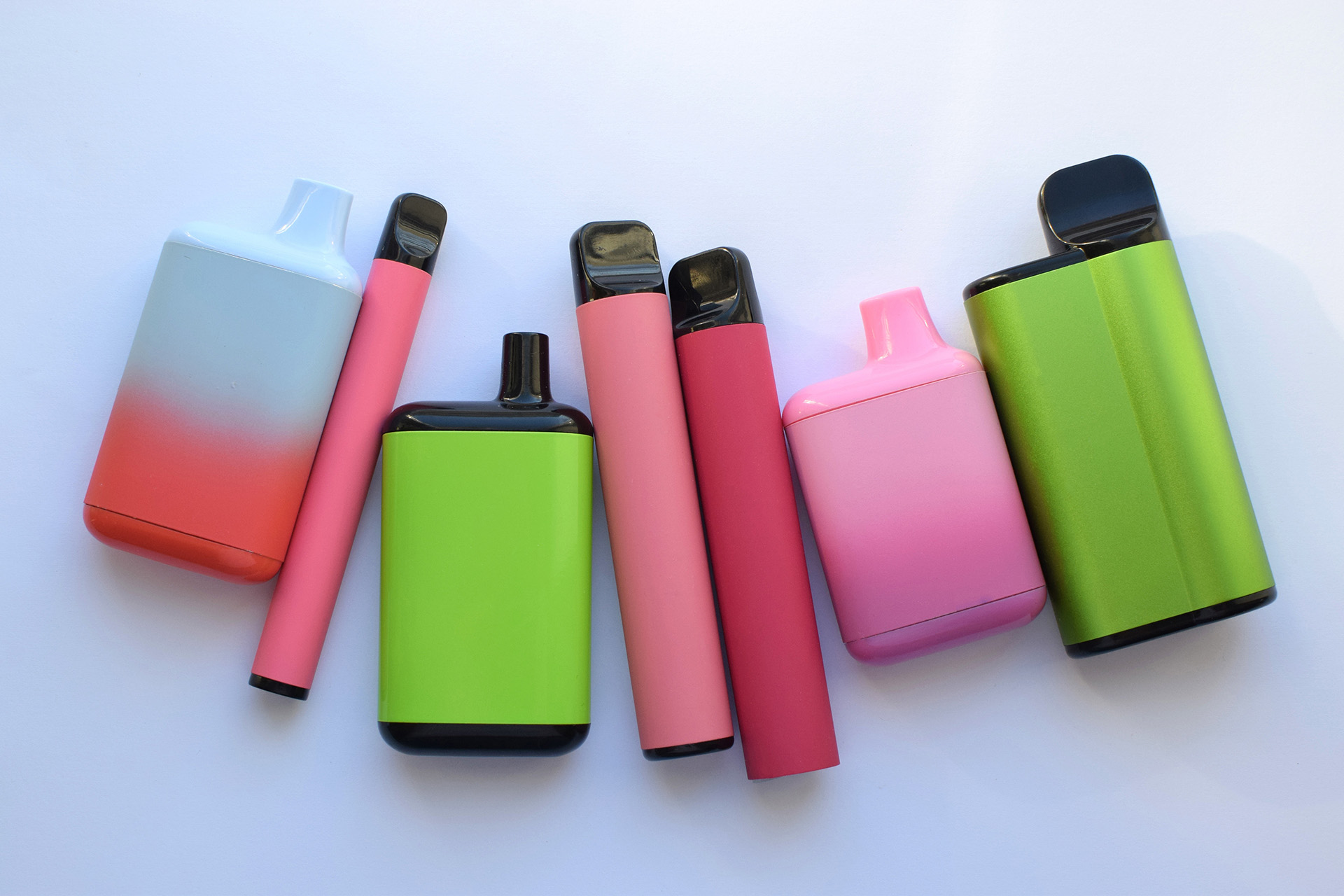
Disposable e-cigarettes lead young adults to nicotine addiction faster than previously assumed
Tobacco consumption remains the leading preventable cause of death worldwide - in Germany alone, the German Cancer Research Center (DKFZ) estimates that around 127,000 people die every year as a result of smoking. According to the WHO, this figure is over eight million worldwide. At the same time, new nicotine preparations are entering the market: in addition to tobacco heaters and nicotine pouches, e-cigarettes that vaporize nicotine liquid are enjoying great popularity. Disposable e-cigarettes, in particular, are offered to teenagers and young adults in bright colors and attractive flavors and are marketed as a less harmful alternative to conventional cigarettes. However, little research has been carried out into how addictive they actually are.
Nicotine levels quickly reach cigarette levels
A team of researchers from the LMU Clinic led by Dr. Tobias Rüther and Dr. Andrea Rabenstein, in collaboration with Dr. Elke Pieper from the Federal Institute for Risk Assessment (BfR), has published initial results on these products: In a randomized, four-arm crossover study with 18 test subjects aged 19 to 28 years, two e-cigarettes were compared with a conventional cigarette brand. The products used were the disposable e-cigarette "Elfbar 600" with 20 mg/ml nicotine (strawberry-kiwi flavor, tobacco flavor), the pod e-cigarette "myBlu" with 18 mg/ml nicotine (tobacco roasted blend flavor) and conventional cigarettes with 0.8 mg nicotine (Marlboro Red).
All products were consumed ad libitum for five minutes under standardized conditions. During the 30-minute trial, puff parameters, cardiovascular data and subjective sensations were continuously recorded; at the same time, several blood samples were taken to determine nicotine kinetics.
The alarming result of the study: the tested disposables of the Elfbar brand reached maximum concentrations in the blood plasma of 7.1 ng/ml (strawberry-kiwi flavor) and 6.9 ng/ml (tobacco flavor) - almost at the level of conventional cigarettes with 8.1 ng/ml. Refillable pod systems (myBlu) were significantly lower at 3.1 ng/ml.
Particularly worrying: the nicotine level rose the most in the disposable products within the first minute of use. The maximum nicotine concentration was reached after just five (Elfbar 600 Strawberry-Kiwi) or six (Elfbar 600 Tobacco) minutes - faster than with classic cigarettes (eight minutes). The rapid increase in nicotine concentration in the acute phase - i.e. in the first few minutes after the start of consumption - is decisive for the addictive potential of a product. Due to their rapid nicotine flooding, the researchers therefore assume that disposable e-cigarettes are the consumption variant with the strongest addictive potential of all the products tested.
The test subjects also rated the disposables as more satisfying and expressed a greater desire to use them again compared to a conventional cigarette. The strawberry-kiwi variant was particularly popular.
Call for increased regulation
"The fact that the new disposable e-cigarettes offer such a fast and high nicotine delivery is not only surprising, it worries us a lot," says last author PD Dr. Tobias Rüther, senior physician at the LMU Clinic. "Young adults in particular run the risk of becoming permanently addicted due to the high, rapid nicotine delivery of these products." The other authors of the study from the LMU Hospital, Dr. Andrea Rabenstein, Christin Falarowski and Anna Rahofer, emphasize: "In our clinical work in the tobacco outpatient clinic, we are increasingly seeing young adults who are highly dependent on these new products and have not smoked before. Many of them report that they found out about these new products from influencers on social media channels."
In view of World No Tobacco Day, the researchers are calling for increased monitoring of sales and consumption trends as well as stricter regulation - for example through restrictions on flavors, packaging design and forms of advertising, including social media.
The research team also recommends nationwide education campaigns about the risks of disposable e-cigarettes. "Only with clear rules and targeted prevention can we prevent a new generation from unintentionally slipping into nicotine addiction," says Rüther.
Publication
Disposable e-cigarettes and their nicotine delivery, usage pattern, and subjective effects in occasionally smoking adults
Falarowski, C., Pieper, E., Rabenstein, A., Mallock-Ohnesorg, N., Burgmann, N., Franzen, K., Gertzen, M., Koller, G., Nowak, D., Rahofer, A., Rieder, B., de Oliveira Pinto Kise, G. R., Schulz, T., Strohmeyer, E., Laux, P., Luch, A., & Rüther, T. (2025).
Scientific reports, 15(1), 16270. https://doi.org/10.1038/s41598-025-97491-5
contact
PD Dr. med. Tobias Rüther, Dr. Andrea Rabenstein, Christin Falarowski, Anna Rahofer
Special outpatient clinic for tobacco addiction, Department of Psychiatry and Psychotherapy, LMU Klinikum München Campus Innenstadt