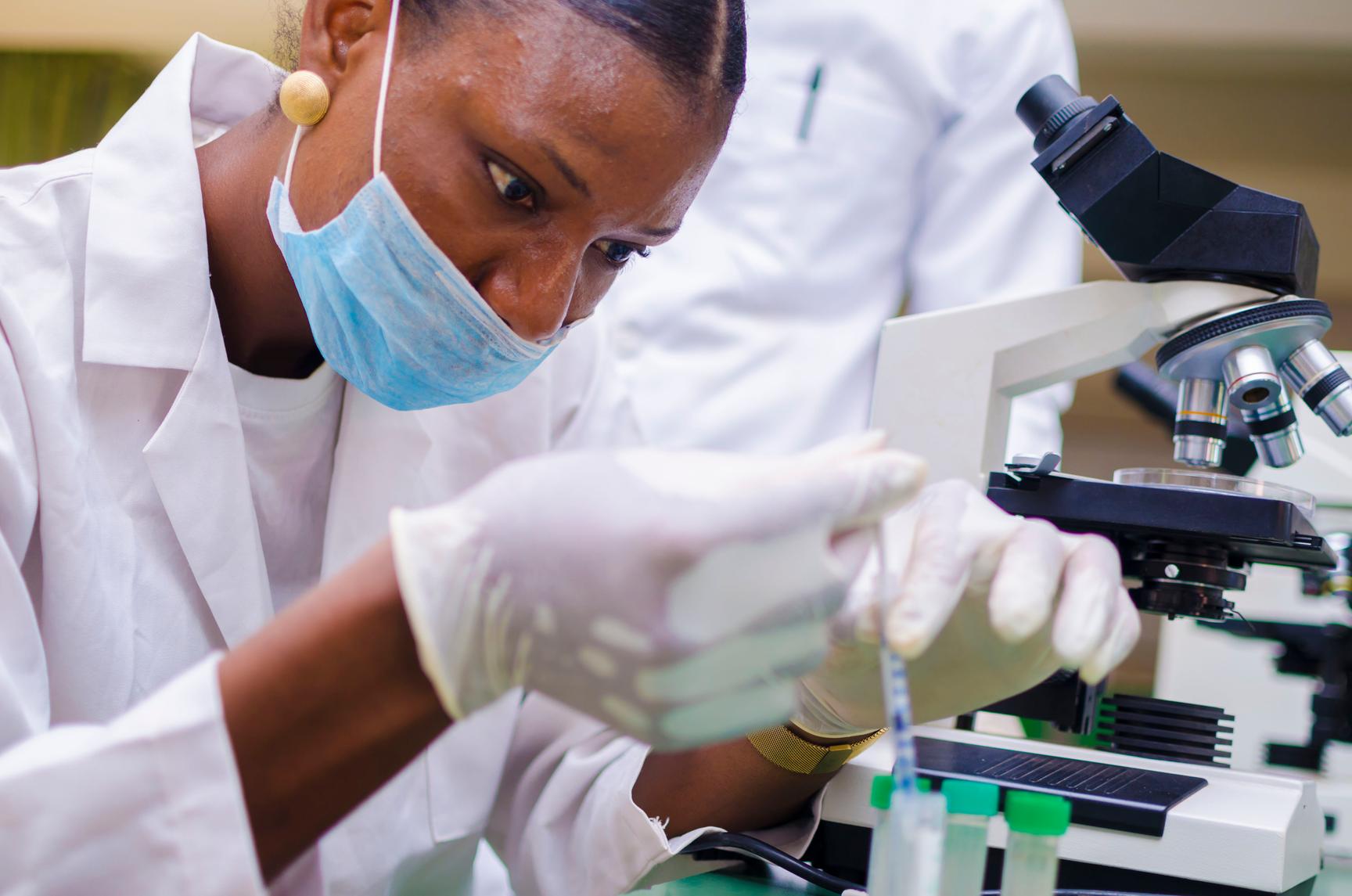
The pharmaceutical company GSK, whose active substance Alpibectir (AlpE) is being investigated as an ethionamide booster, is also involved in the study, which will include a total of 120 adult study participants at several clinical study sites in Africa. Currently, ethionamide has to be taken in very high doses, which often leads to severe side effects such as nausea and vomiting. Many patients therefore discontinue treatment. The STEP2C Stage 3 study aims to evaluate Alpibectir as an ethionamide booster, so that lower doses are sufficient and the therapy is better tolerated by patients.
Alpibectir has already been evaluated as generally well tolerated in previous phase 2a studies over 14 days in drug-sensitive pulmonary tuberculosis. In the STEP2C Stage 3 study now underway, alpibectir will be tested over a period of two months in combination with established first-line therapies, followed by continuation of standard therapy.
"With the evaluation of alpibectir, UNITE4TB is testing its fifth novel drug candidate in its innovative Phase 2b regimen selection platform, where we evaluate how novel assets are best combined with other licensed or new drugs. This approach will help to derisk the chance of progressing the wrong combination into Phase 3. LMU Hospital is proud to be the sponsor of a trial for such a promising drug." Prof. Dr. med. Michael Hoelscher, Director of the Institute of Infectious Diseases and Tropical Medicine at LMU University Hospital, Principal Investigator of the STEP2C Stage 3 study and Scientific Lead of UNITE4TB
About UNITE4TB
UNITE4TB brings together 30 partners from 13 countries to fundamentally improve the development of new tuberculosis therapy regimens through innovative study designs, adaptive platform approaches and more efficient clinical processes. The Tropical Institute at LMU University Hospital sponsors several UNITE4TB studies, including DECISION and STEP2C Stage 3.
Funding
This project has received funding from the Innovative Medicines Initiative 2 Joint Undertaking (JU) under grant agreement No 101007873. The JU receives support from the European Union's Horizon 2020 research and innovation programme and EFPIA, Deutsches Zentrum für Infektionsforschung e. V. (DZIF), and Ludwig-Maximilians-Universität München (LMU). EFPIA/AP contribute to 50% of funding, whereas the contribution of DZIF and the LMU University Hospital Munich has been granted by the German Federal Ministry of Education and Research.