While tuberculosis has become relatively rare in Germany and other industrialized nations, around 10 million people contract the bacterial infection every year, particularly in poorer countries. This makes tuberculosis the most common bacterial cause of death worldwide. According to the World Health Organization (WHO), around 1.6 million people die from it every year, particularly in South East Asia, Africa and the Western Pacific region. Infection is particularly dangerous for people with a weakened immune system, especially those infected with HIV.
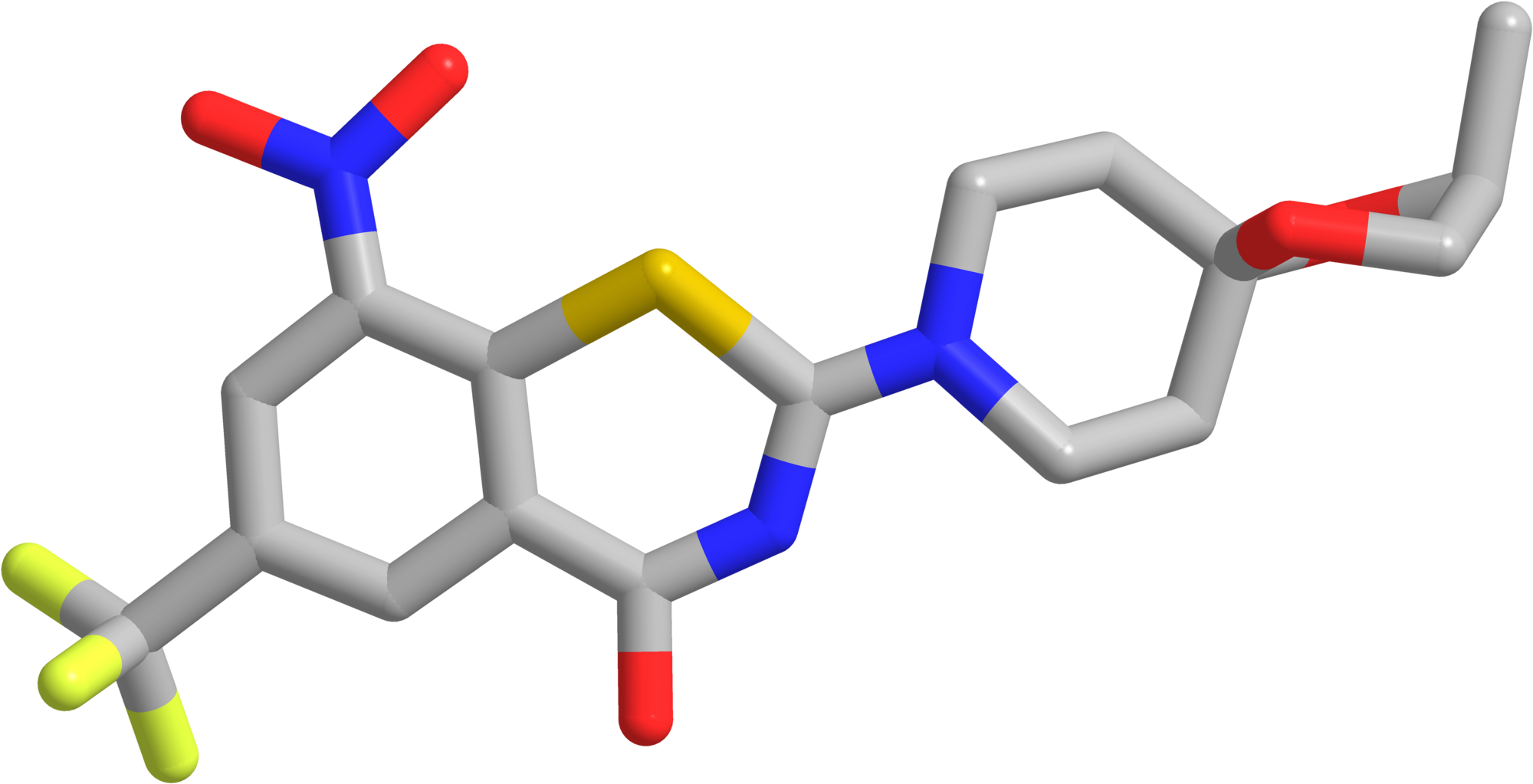
In addition to a lack of medical care in poorer countries, the increasing number of resistances to common tuberculosis therapies is a problem. At the same time, hardly any new antibiotics are being developed. The nitrobenzothiazinones (BTZs) discovered and developed at the Leibniz-HKI are a very effective class of antibiotics against the tuberculosis pathogen Mycobacterium tuberculosis, including resistant strains. BTZ-043 was the first member of this substance family to receive worldwide patent protection for its effect against the tuberculosis pathogen. "The active ingredient irreversibly binds to an enzyme that the mycobacteria need to build the bacterial cell wall," explains Florian Kloß. As head of the anti-infectives transfer group at the Leibniz-HKI, he played a key role in the development of the active substance.
First clinical trials successful
The substance, which has now been named Active Ingredient of the Year, has already successfully completed its first clinical trials. A phase I study conducted in Germany on healthy volunteers showed that BTZ-043 was well tolerated. The subsequent phase IIa clinical trial was conducted on tuberculosis patients in Cape Town (South Africa). It confirmed BTZ-043 as safe and effective - an important step in the development of a new drug. Further Phase II clinical trials are currently being planned to investigate BTZ-043 in combination with various standard anti-tuberculosis drugs. This means that it is now within reach that BTZ-043 could replace one of the conventional, often resistance-prone antibiotics in a combination therapy and shorten the duration of treatment for tuberculosis.
For the preclinical and clinical studies, the Leibniz-HKI has been cooperating closely with the Tropical Institute at LMU Klinikum München since 2014. They are commissioned and supervised by the Director of the Tropical Institute, Professor Michael Hoelscher, and his team. The highly effective substance is manufactured by a medium-sized pharmaceutical company, Hapila GmbH in Gera.
The drug development, which costs several million euros, is only possible thanks to joint funding from the public and private sectors: in particular, the two research associations InfectControl and the German Center for Infection Research (DZIF), which are funded by the Federal Ministry of Education and Research (BMBF), are involved in the drug development. The clinical trials are taking place as part of the European-African consortium PanACEA II, funded by the European & Developing Countries Clinical Trials Partnership (EDCTP), and the research consortium "Academia and Industry United Innovation and Treatment for Tuberculosis" (UNITE4TB). The latter is supported at European level by the Innovative Medicines Initiative (IMI), a public-private cooperation that now operates under the name "Innovative Health Initiative" (IHI), and at German level by the BMBF*.
In addition to Florian Kloß, Sina Gerbach and Freddy Bernal were honored with the prize. While Kloß was primarily responsible for the chemical aspects of the preclinical and clinical development of BTZ-043 and was involved in several patent applications and publications, Gerbach led the contract research on drug safety and the in vitro studies on possible drug-drug interactions required by the regulatory authorities. Bernal developed computer models to investigate the relationship between the structure of benzothiazinones, their physical properties and their efficacy.
*Further informationon BTZ-043 and funding (BMBF website)
Source: Press release of the Leibniz-HKI