New tuberculosis drugs and drug regimens
Tuberculosis (TB) is one of the ten most threatening diseases worldwide and is the most common cause of death from diseases caused by a single infectious agent (even before HIV/AIDS). According to the World Health Organization (WHO), around a quarter of the world's population is infected with Mycobacterium tuberculosis (MTB) bacteria (see WHO Global Tuberculosis Report, 2022). Although curable or at least treatable, around 1.5 million people die from the lung disease every year, particularly in Southeast Asia, Africa and the Western Pacific region. In most people infected with tuberculosis bacteria, the infection is latent, without tuberculosis symptoms or complaints. However, around five to 15 percent of people with latent tuberculosis develop an active, transmissible tuberculosis disease in the course of their lives. In addition, tuberculosis is a disease associated with poverty (see BMBF). The spread of TB depends, for example, on access to medical care.
One of the main challenges in treating the disease is the increasing occurrence of resistant germs, against which only a few antibiotics are still effective. In addition, the current treatment of tuberculosis is complicated and takes a long time because patients require a combination therapy of three to four drugs over a period of four to 18 months, and despite increasing research activities in these areas, there is a lack of integrated approaches to the development of TB drugs for accelerated tuberculosis therapy.
The researchers in the "New Tuberculosis Drugs and Drug Regimens" working group headed by Prof. Dr. med. Michael Hoelscher/PD Dr. med. Norbert Heinrich are working on solutions to this problem:
- On the one hand, the development of tuberculosis drugs based on new active substances and new drug combinations is intended to counteract the infectiological threat posed by resistant bacterial infections and enable more tolerable, shorter treatment. The general aim is to reduce the duration of therapy with new drug combinations to four months or less. This is done in collaboration with other academic institutions or pharmaceutical companies and includes the preclinical and clinical evaluation of drugs and their combinations.
- On the other hand, we work on the development of innovative study designs for phases IIa-IIc and their implementation. The working group evaluates both new drugs and existing drugs in new dosages or formulations.
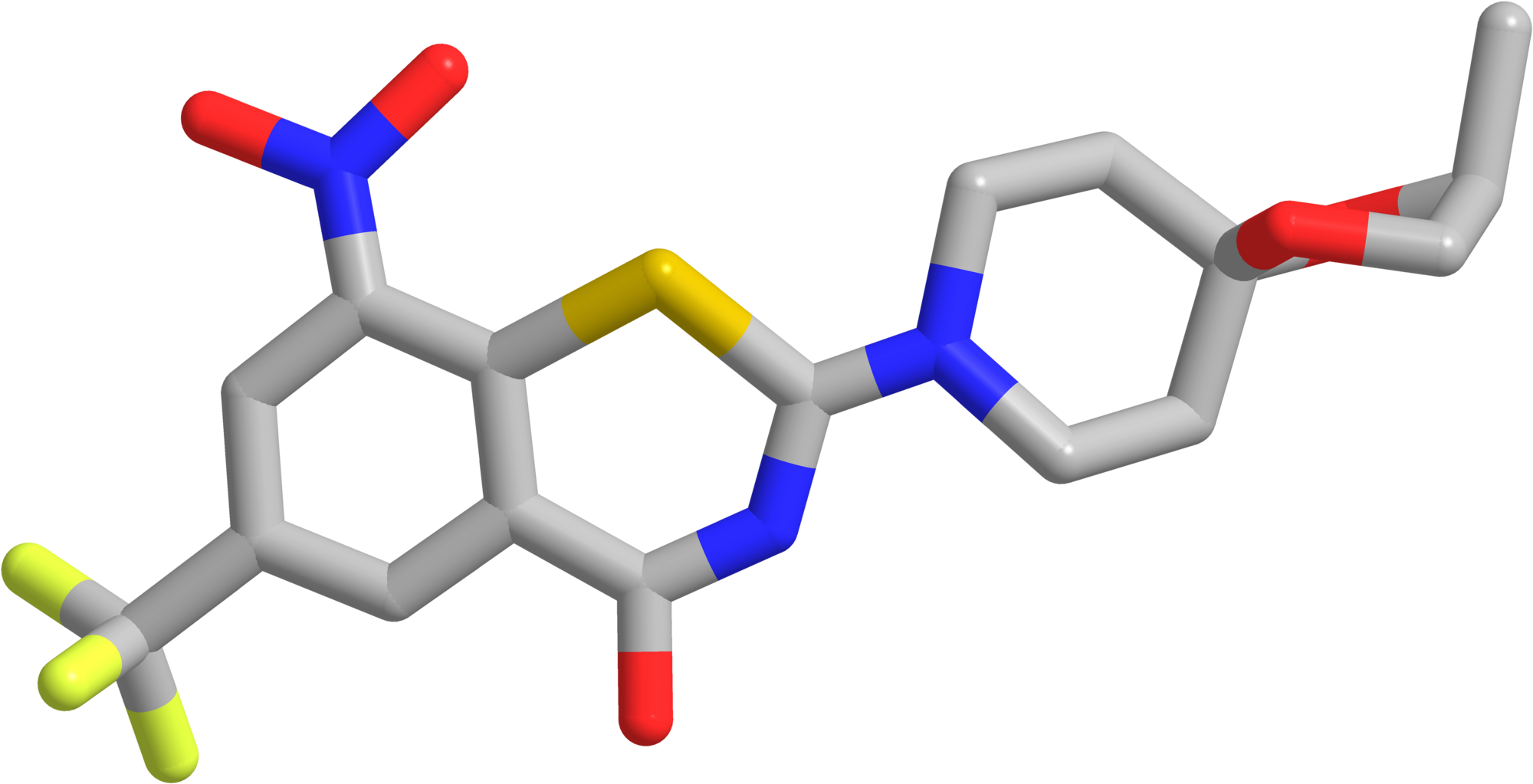
A central project is the development of the antibiotic BTZ-043 (Scientific Program Manager, Dr. med. vet. Julia Dreisbach): The novel active ingredient was discovered by researchers at the Leibniz Institute for Natural Product Research and Infection Biology (Leibniz-HKI) in Jena and has been undergoing further development in a development partnership with the working group at the Munich Tropical Institute since 2014. "The fact that a university hospital is attempting to approve a drug on its own is unique in Germany," affirms Tropical Institute Director Professor Michael Hoelscher (see interview LMU, 01.09.2021).
Since June 2021, the drug BTZ-043 has been included in the large-scale public-private research consortium UNITE4TB, a project in the IHI AMR Accelerator Program of the Innovative Health Initiative (IHI), alongside other drug candidates from various manufacturers. The Tropical Institute co-initiated the project and, through Prof. Michael Hoelscher, also took over the scientific management of UNITE4TB. With the participation of the working group of PD Dr. med. Norbert Heinrich, the Tropical Institute plays a central role in the development of study design and analysis, the development of new biomarkers and the implementation of clinical phase IIb/c studies. For further information and funding of UNITE4TB, see the "Projects" section.
In addition, the research group acts in an advisory capacity in various consortia and initiatives and is, for example, part of the Working Group on New TB Drugs. In addition, the research group is working, for example within the UNITE4TB research consortium, on the development and clinical evaluation of diagnostic biomarkers for a personalized, shortened tuberculosis treatment.
The ERASE-TB study (Early Risk Assessment in TB Contacts by the Use of New Tests) aims to establish early diagnosis of developing tuberculosis in TB contacts using new diagnostic assays.
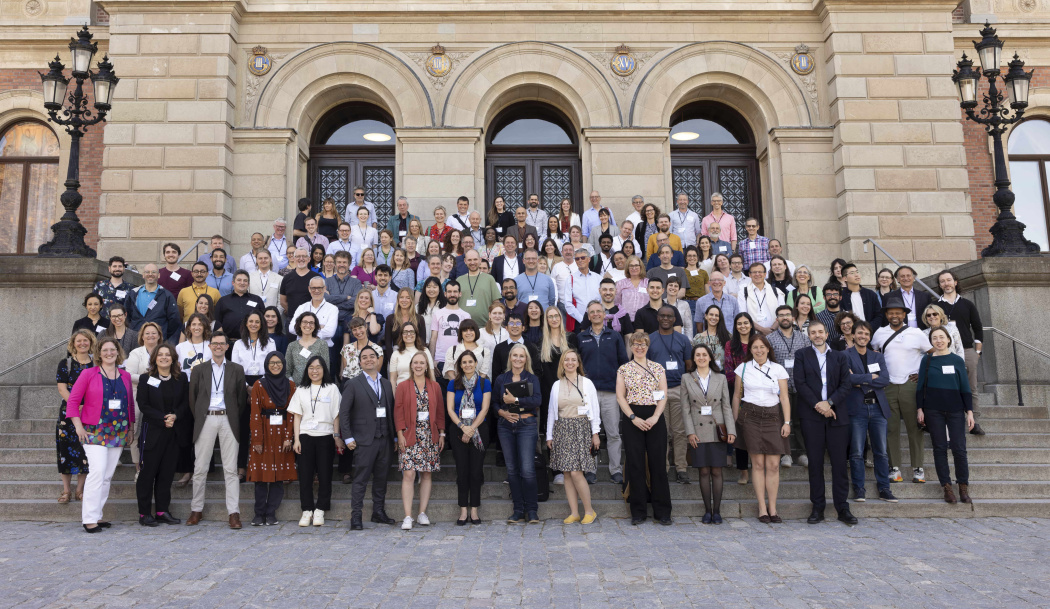
Annual meeting of the UNITE4TB consortium in Uppsala, 2024
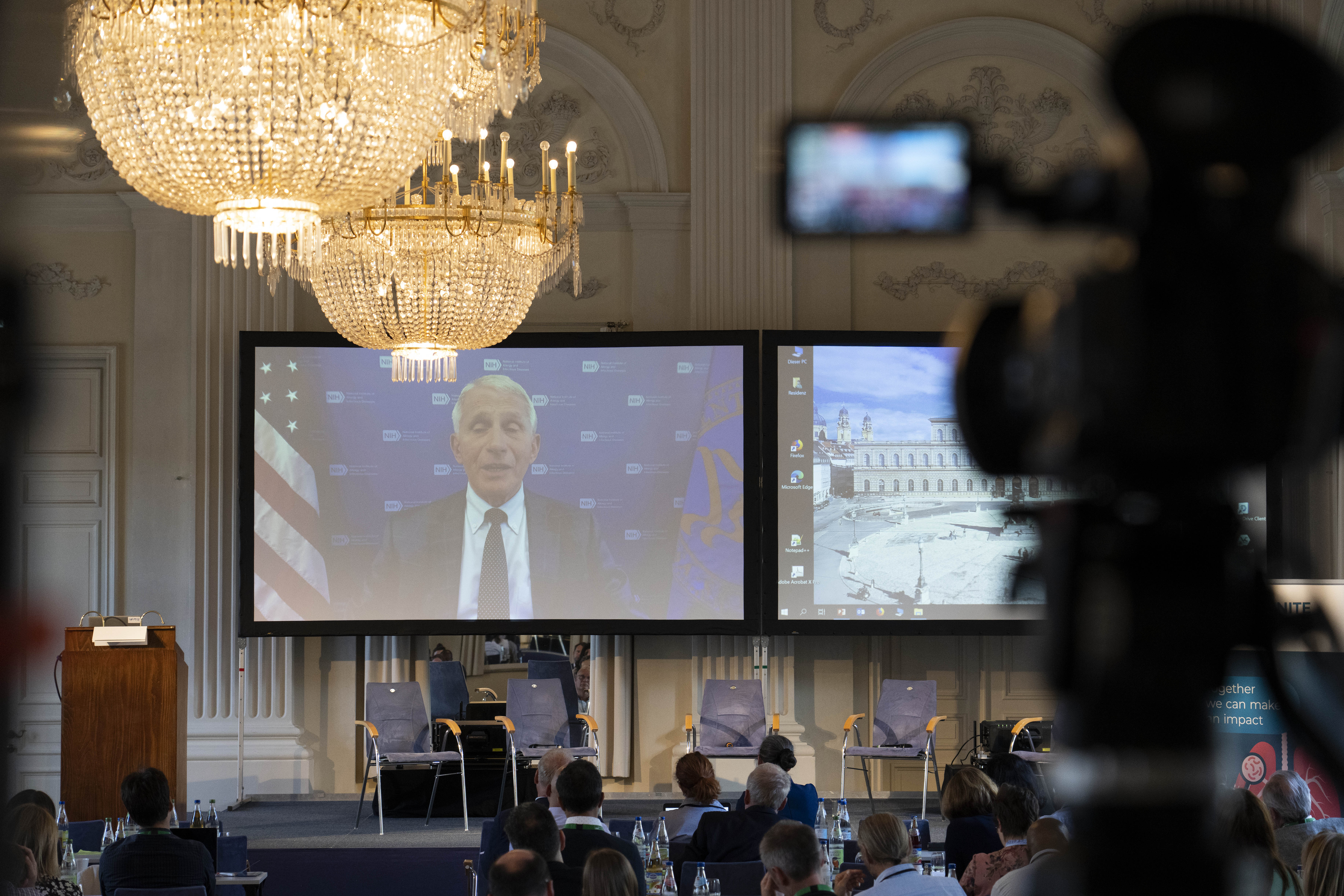
Video message from Anthony S. Fauci, M.D., former NIAID Director, NIH, on the occasion of the UNITE4TB Annual Meeting 2022 in Munich
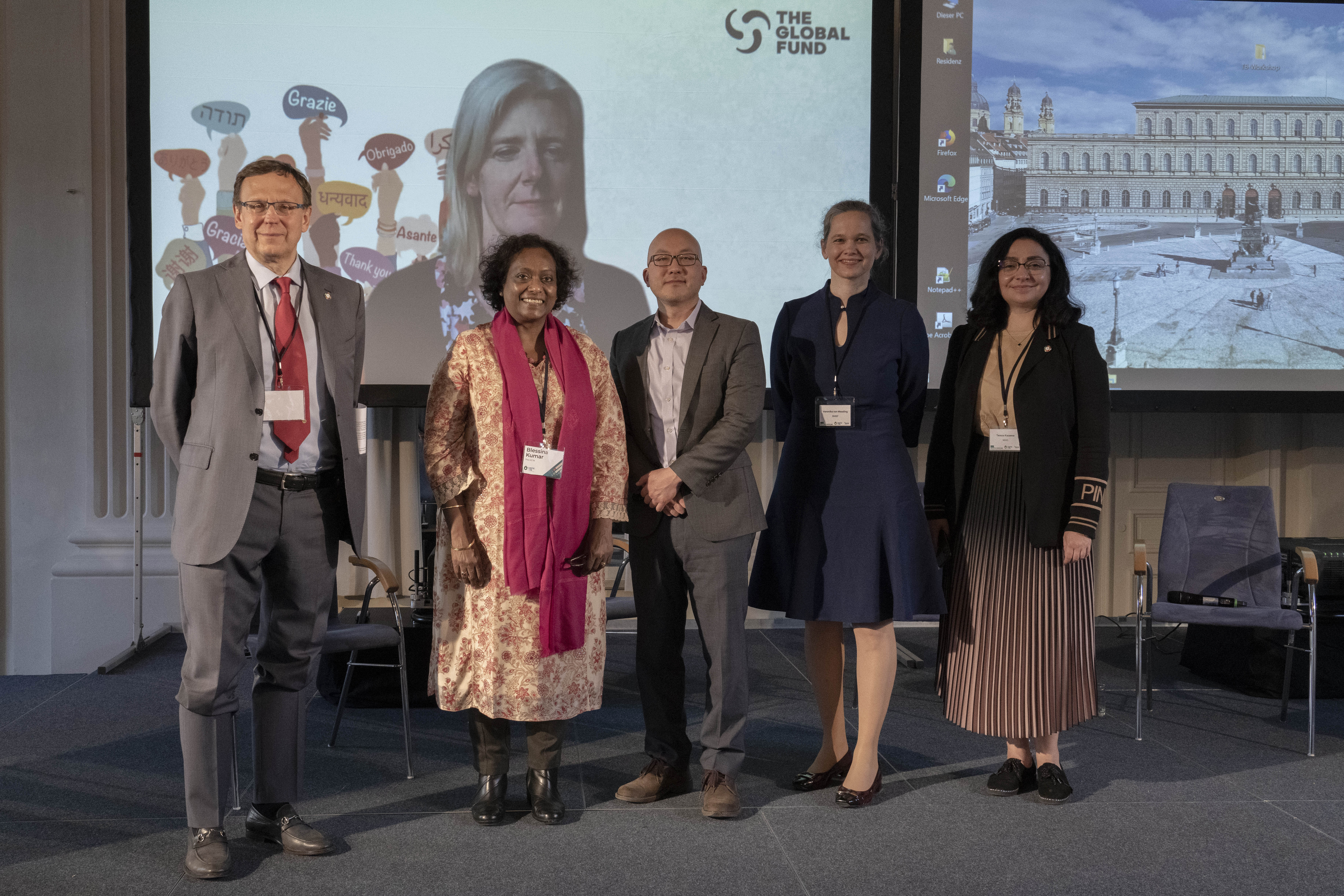
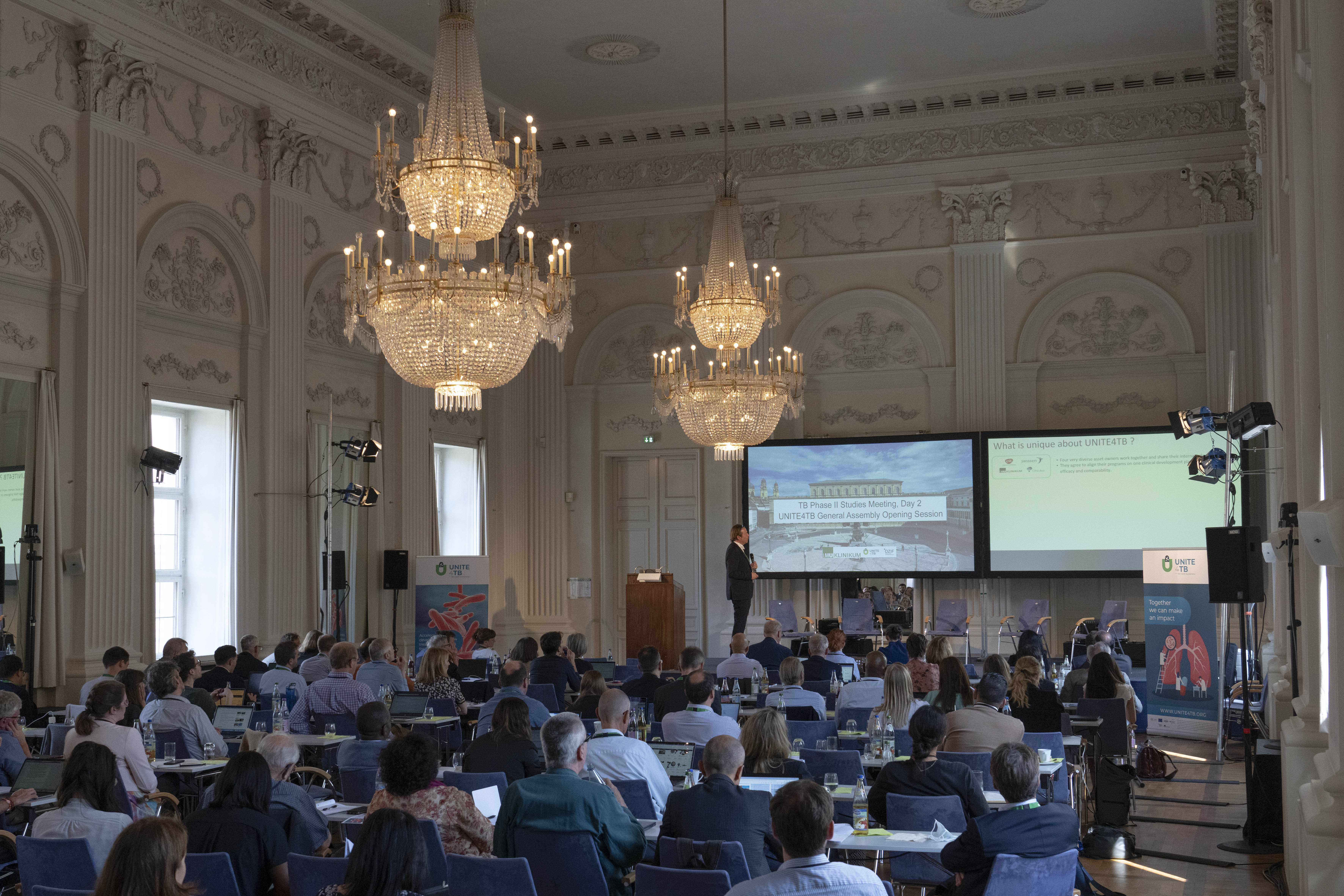
UNITE4TB Annual Conference in the Munich Residence, 2022
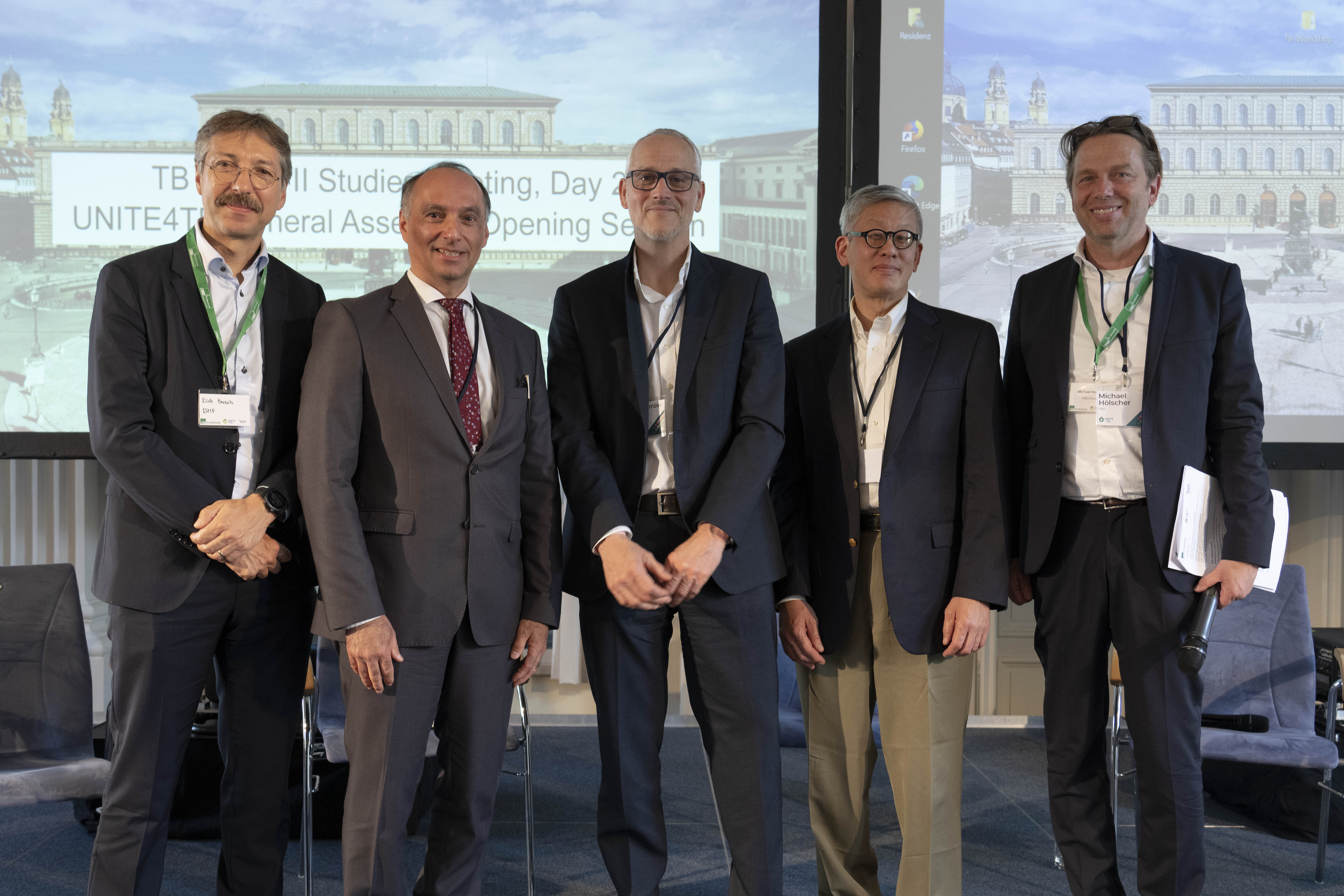
Participants of the panel discussion, UNITE4TB Annual Meeting 2022: (from left to right) Dirk Busch (DZIF), Masoud Dara (Otsuka), David Barros (GSK), Eugene Sun (TB Alliance), Prof. Dr. Michael Hoelscher (LMU Klinikum)
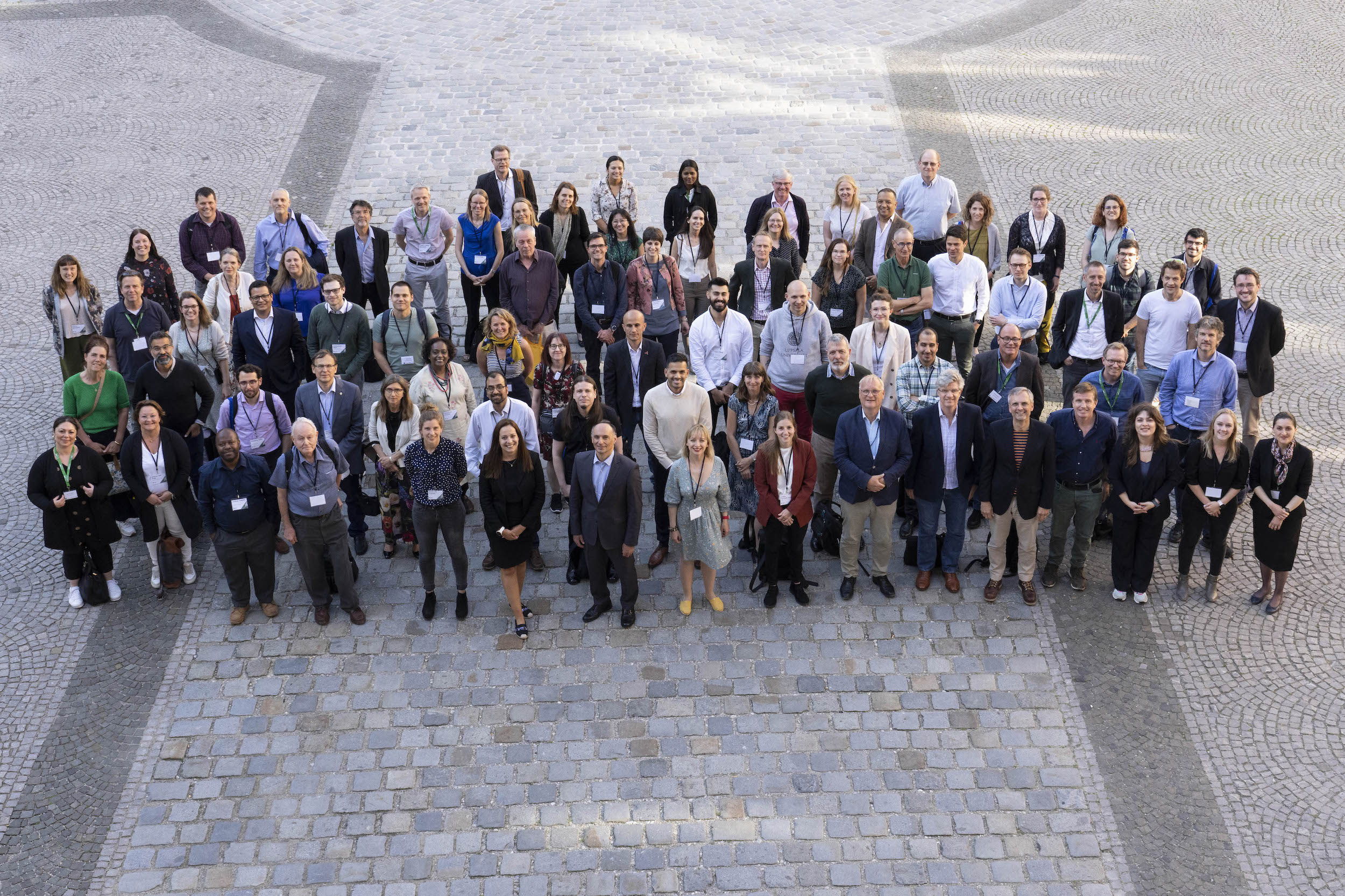
To advance research in the fight against tuberculosis worldwide, the UNITE4TB consortium started its work in 2021 as part of the AMR Accelerator Program of the Innovative Health Initiative (IHI). UNITE4TB is the largest public-private collaboration on TB clinical drug development in the history of the EU. The global network of academic institutes and pharmaceutical companies makes it possible to explore how drugs already in development can be combined to create a powerful anti-tuberculosis combination.
The drug BTZ-043 is included in UNITE4TB alongside other drug candidates from various manufacturers. The Tropical Institute co-initiated the project and, through Prof. Michael Hoelscher, has also taken over the scientific management of UNITE4TB. With the participation of PD Dr. med. Norbert Heinrich's working group, the Tropical Institute plays a central role in the development of study design and analysis, the development of new biomarkers and the implementation of clinical phase IIb/c studies.
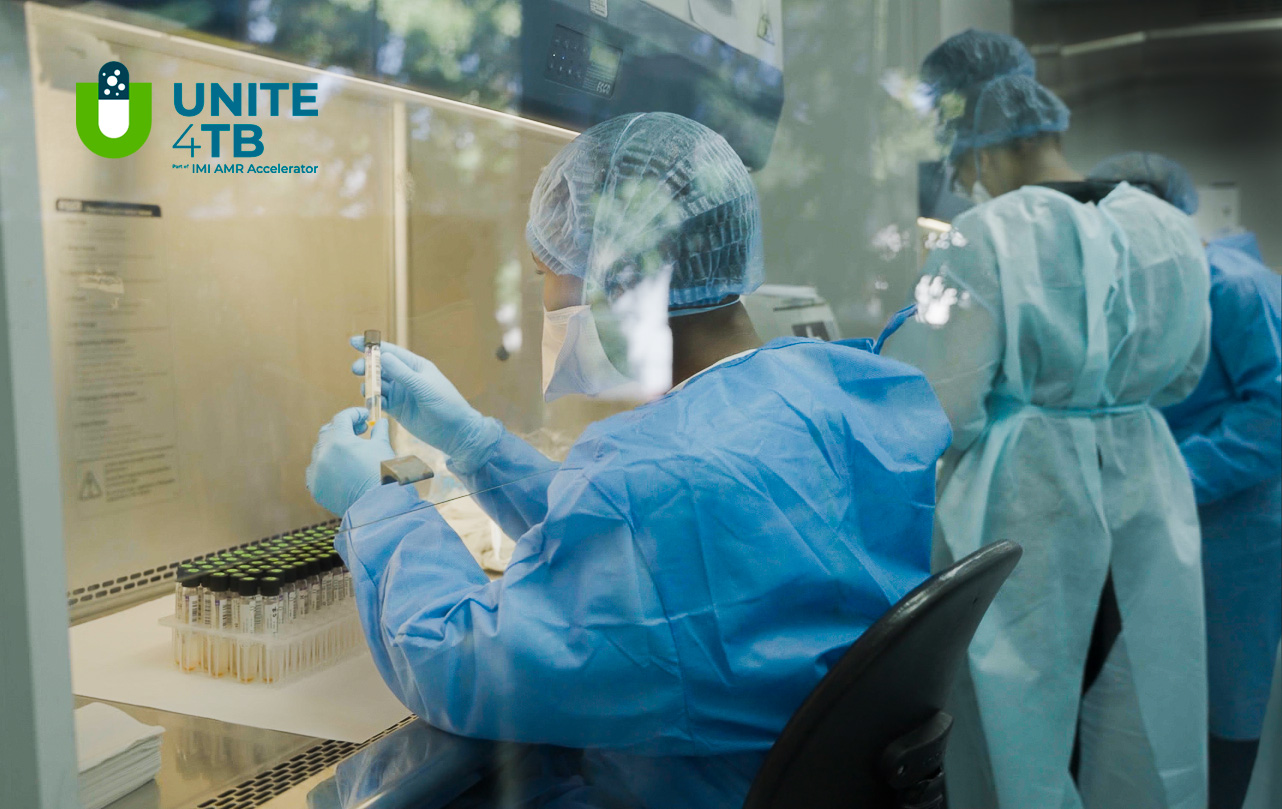

In the ERASE-TB (Early risk assessment in TB contacts by the use of new tests) study, the early diagnosis of developing tuberculosis in TB contacts will be established using new diagnostic assays. In 2021, the international research team began recruiting up to 2,100 contact persons with infectious pulmonary tuberculosis for the study. The study is being conducted with local partners in Tanzania, Mozambique and Zimbabwe and will be followed up for up to 2 years.