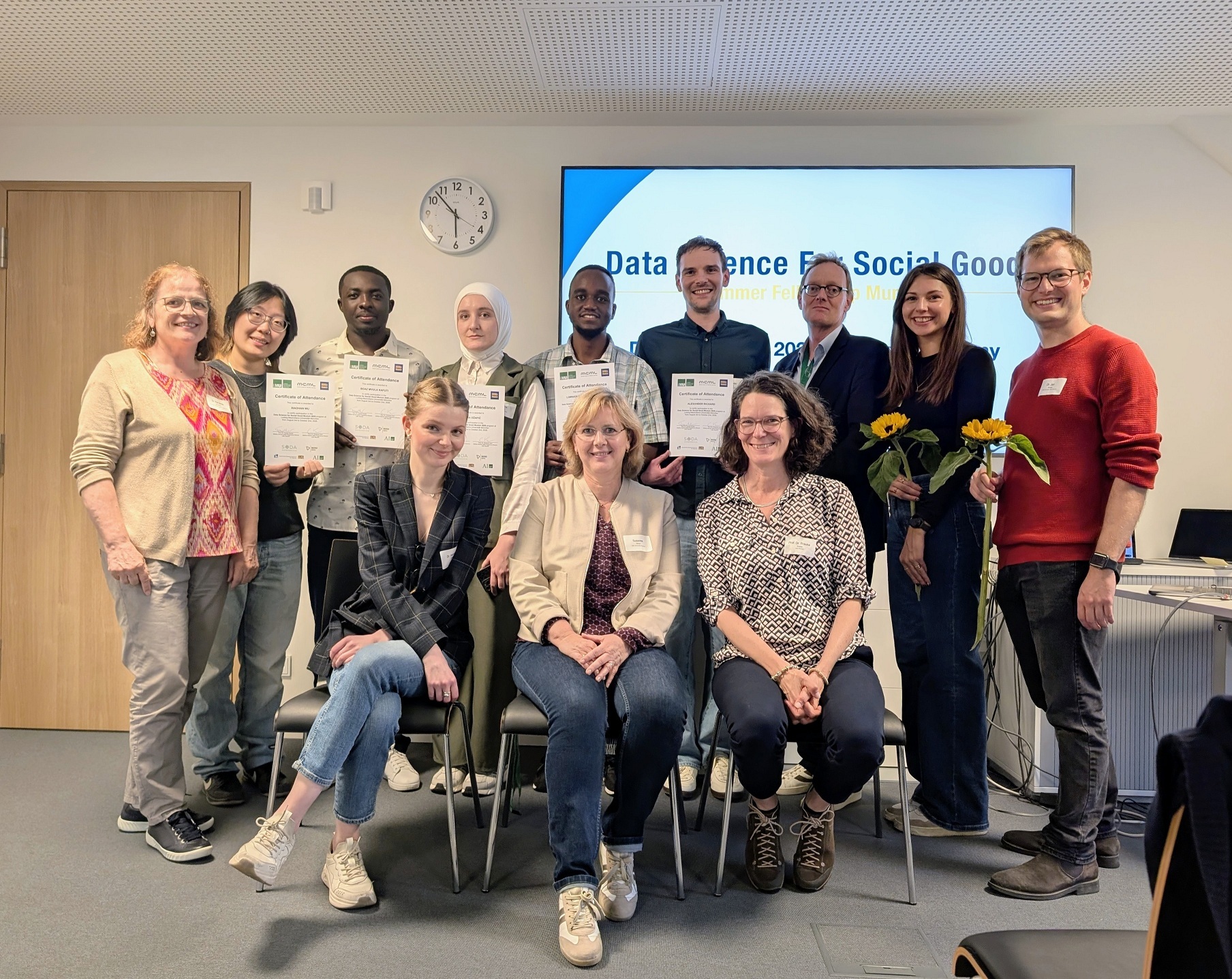
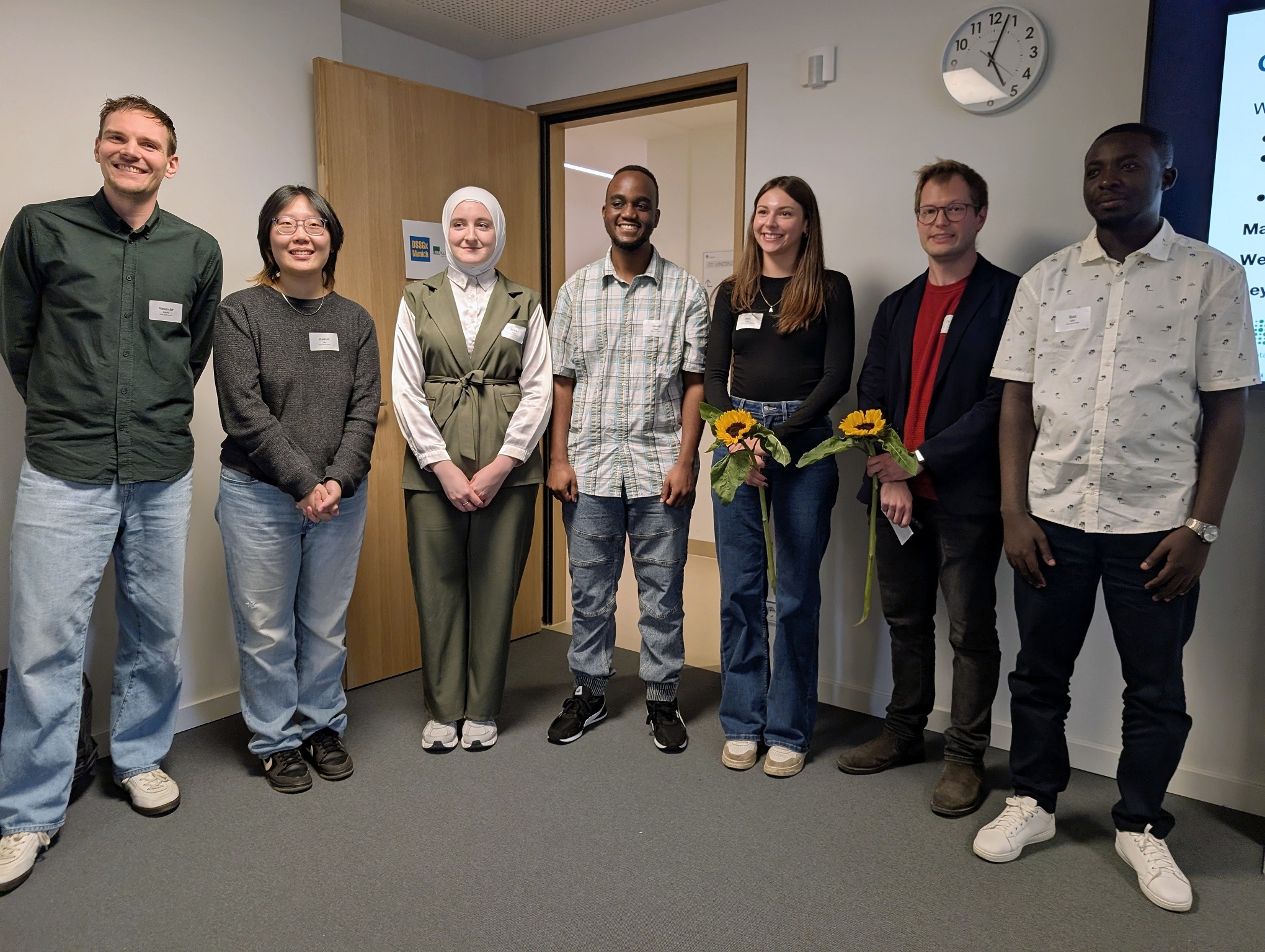
It’s finally done: At the closing event on October 2 at our Institute of General Practice and Family Medicine, the five DSSG fellows presented their findings. The highlight: The data analysis has yielded the “Collaborative Care Compass,” a research prototype for a tool that can be used in practice by doctors and patients—an important step toward tailored, structured care and the integration of patients with depression into primary care settings.
The background: As part of the DSSGx Munich (Data Science for Social Good) Fellowship, the data from our depression study—conducted within the POKAL Graduate College on Collaborative Care—was analyzed during a two-month intensive program. Five international fellows—talented young data scientists—came to Munich for this purpose. What made this special was that we had the honor of leading the first medical DSSGx project.
We would like to take this opportunity to extend our heartfelt thanks to everyone involved—to our five fellows for their extraordinary dedication, to the mentors at the SODA Lab at the Institute of Statistics (LMU Munich) led by Prof. Dr. Frauke Kreuter, the Munich Center for Machine Learning (MCML), the consulting physicians and the patient representative, as well as everyone who made the project possible with their data, ideas, and support.
For us, the exciting phase is just beginning: further developing the prototype and refining the tool so that it can actually be used in daily clinical practice—for the benefit of primary care physicians and their patients. Stay tuned for the next steps!