News | 17/09/2020 | medicine, Medical research

Munich study accompanies corona patients with hybrid smartwatch

A current study equips Covid-19 patients in home quarantine with a hybrid smartwatch that measures ECG and oxygen saturation. The study aims to find out whether unnecessary hospital stays can be avoided in this way. The study is being funded by the German Center for Cardiovascular Research (DZHK) and is being carried out by LMU Klinikum München.

Dr. Moritz Sinner is leading the study "Munich Remote SpO2 and Heart Rate Assessment in Covid-19 patients (COVID-SMART)"

Middle-aged people are now the largest group among those infected with coronavirus. Around 13 percent of them have pre-existing cardiovascular conditions such as atrial fibrillation, high blood pressure, coronary heart disease or heart failure; they have had heart surgery or are heavy smokers - and are therefore at risk of developing severe Covid-19. As a rule, those affected are initially quarantined at home. If they get worse, they are often unsure whether and when they should go to hospital.

"Corona patients without severe symptoms can be a major burden for hospitals, as they tie up a lot of resources that are then lacking for seriously ill patients," says study leader Dr. Moritz Sinner from the Medical Clinic and Polyclinic I at LMU Klinikum München. Conversely, an unnecessary hospital stay is also a burden for corona patients.

Not too early and not too late

Image without a title
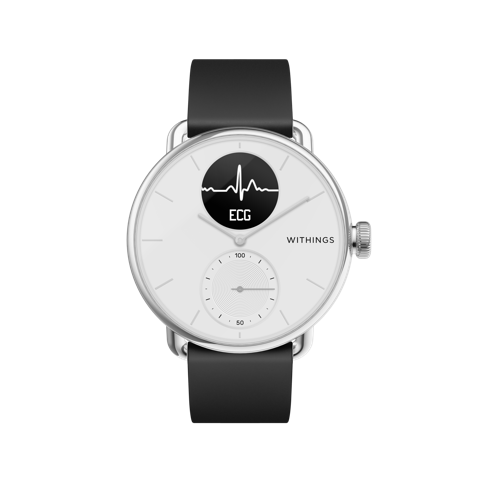
With a hybrid smartwatch, study participants can write an ECG and measure oxygen saturation in the blood.

The study therefore aims to determine the necessity and optimal time for hospitalization - not too early and not too late is the motto. The cardiologist equips the high-risk patients aged between 40 and 60 with a hybrid smartwatch. They can use it to write an ECG and measure the oxygen saturation in their blood twice a day, or more often if they have symptoms.

"These values provide reliable information about the state of health. If they are critical, which includes an oxygen saturation below 92 percent, patients can call a 24-hour hotline and speak to someone from our team. Together, we can then discuss whether hospitalization is necessary," says Dr. Moritz Sinner.
Patients should report themselves

All you need to take part is a cell phone with an app installed on it. The hybrid smartwatch ScanWatch from health tech provider Withings, which is equipped with intelligent functions but looks like a normal watch, is given to Covid-19 patients for the duration of the study (30 days). "The watch is easy to use, the values are stored in the app and can be viewed by the study team," explains Sinner. However, the patients have to report themselves, either if they feel worse, for example if they experience shortness of breath, or if the oxygen saturation values raise the alarm.

Health Department provides information about the study

The study observes each patient for 30 days and is randomized. This means that the participants are divided into two groups - one receives the hybrid smartwatch, while the other group can receive full treatment from the healthcare system at any time. Who is in which group is decided by chance.

Infected persons in the above-mentioned age and risk group will be informed about the study by the City of Munich's Health Department (GSR). To record the data and hand over the hybrid smartwatch, the study staff come home in protective clothing.

Study hotline

Patients who would like to take part in the "Munich Remote SpO2 and Heart Rate Assessment in Covid-19 patients (COVID-SMART)" study can also contact the study hotline directly or by email. Around 600 patients from the greater Munich area can participate.

Contact:

To the flyer of the COVID-SMART study

Contact person:

Mr. PD Dr. med. Sinner, Moritz

Head of the study Medical Clinic and Polyclinic I

Originally translated with DeepL