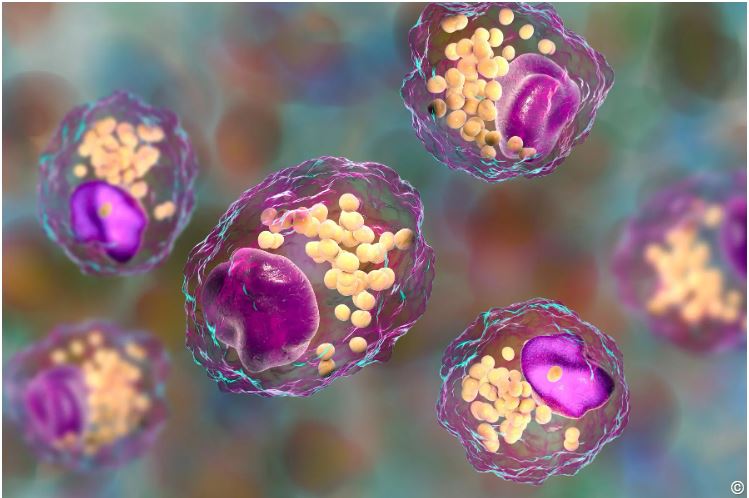
Atherosclerosis occurs when cholesterol deposits accumulate in the walls of blood vessels and inflammatory cells migrate into the vessel wall. A harmful inflammatory reaction builds up there, which takes on a life of its own, becomes chronic and leads to deposits, known as plaques in technical jargon. They constrict the blood vessels. What's more, clots can form on the plaques and break away, travel through the blood and block vessels in the heart or brain. This can lead to a heart attack or stroke.
Macrophages are immune cells that dispose of cell debris and perform other important functions in the tissues of our body. However, they are also significantly involved in atherosclerotic plaque formation in the vascular wall. "Until now, it was only known how scavenger cells are recruited for atherosclerotic plaque formation and contribute to the development of the disease," says Dr. Kami Pekayvaz, first author of the study. Certain messenger substances of the immune system - called CCL2 and MIF - play a decisive role in this process.
In their study, the researchers used modern analytical methods to investigate in detail what happens after scavenger cells are recruited to the vessel wall. They deciphered how muscle cells in the vascular wall actively influence the local inflammatory environment - and made a surprising discovery: vascular muscle cells release the messenger substances CCL2 and MIF, which are considered particularly harmful and have a strong effect on the function and distribution of scavenger cells.
However, this does not lead to an inflammation-promoting influence on scavenger cells, but rather ensures the normal, healthy functions of the scavenger cells. When the scientists prevented the release of CCL2 and MIF, the macrophages died or no longer worked properly, "which accelerated the development of vascular inflammation and atherosclerosis," says Pekayvaz. Depending on their location in the vessel wall, the bad guys have a protective effect on the atherosclerotic process that costs millions of lives worldwide. This discovery is very important for further cardiovascular research, as researchers worldwide are working on anti-inflammatory therapies in their laboratories. "However, these therapies should not block the potentially beneficial effects of the messenger substances in certain areas of the vascular system and should therefore be cell-specific," says the Munich researcher, "in order to optimize the effect of these innovative treatment approaches."
Publication:
Mural cell-derived chemokines provide a protective niche to safeguard vascular macrophages and limit chronic inflammation
Pekayvaz et al, 2023, Immunity 56, 1-17
DOI: https://doi.org/10.1016/j.immuni.2023.08.002