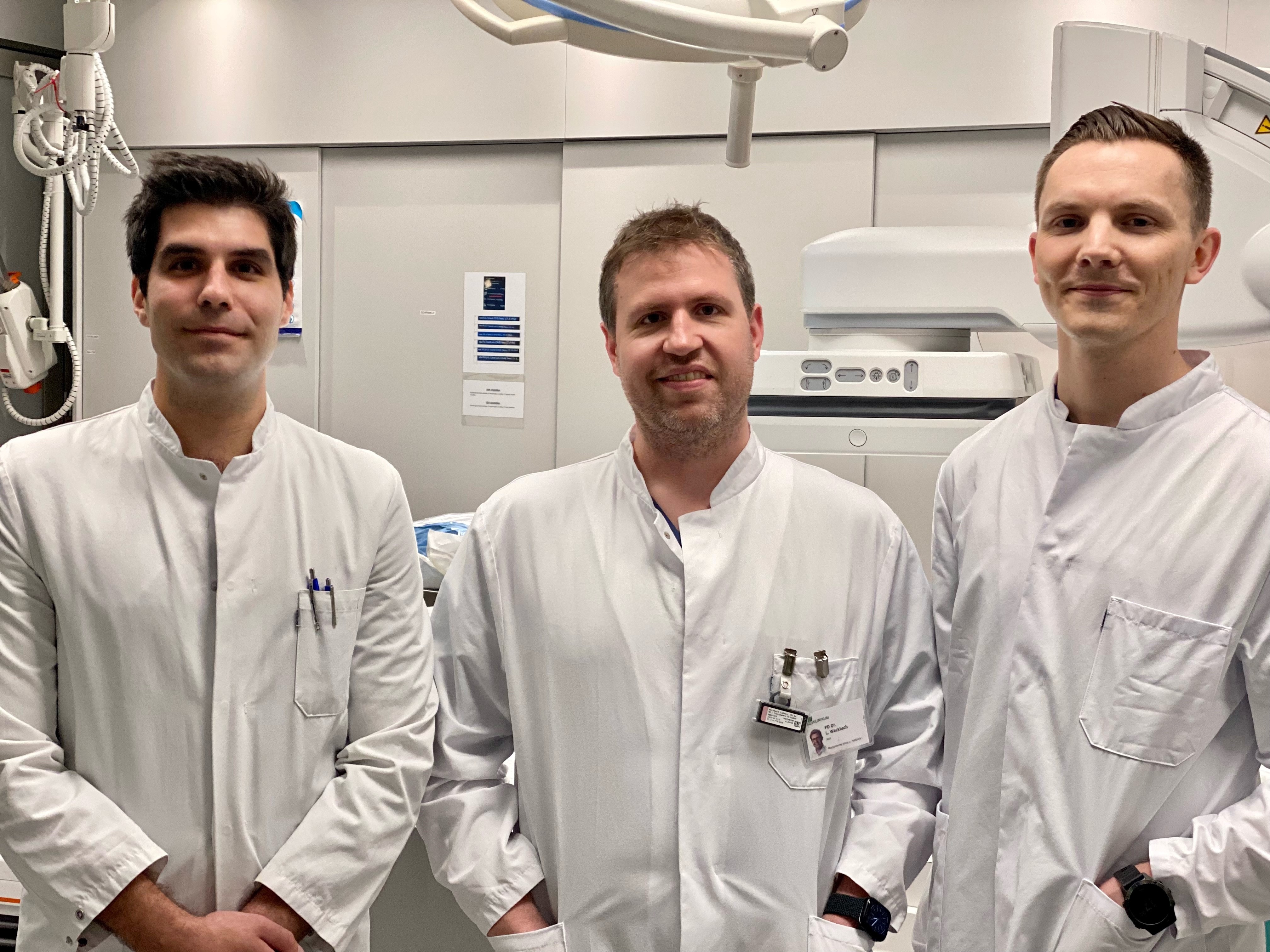
Blood clots are a common cause of morbidity and mortality worldwide. Clearly distinguishing the origin of blood clots (especially between the arterial and venous systems) is essential for effective secondary prevention. In the future, these signatures could be used diagnostically to reliably identify the origin and cause of blood clots and thus serve the targeted prevention of new blood clot formations.In his project funded by the Else-Kröner-Fresenius Foundation, Dr. Pekayvaz will investigate immune signatures that define the origin of stroke thrombi and can potentially be used for diagnostic purposes.
In the project funded by the Else Kröner-Fresenius Foundation, Dr. Weckbach is investigating the significance of neutrophil granulocytes for the T-cell-mediated inflammatory response in myocardial tissue in the context of myocarditis. Various modern methods will be used to investigate the significance of these immune cells for the initiation of inflammation. The findings of this project should also lead to new therapeutic approaches.
Dr. Kaiser will use EKFS funding to investigate the interaction between neutrophil granulocytes and a particularly activated subpopulation of blood platelets, so-called procoagulant thrombocytes. The mutual activation of both cell types is associated with an excessive immune response, which can lead to self-damage in the context of sepsis, for example. Mouse models of sterile inflammation and bacterial infection as well as high-throughput methods will be used to shed more light on this activation at a functional level. The aim is to identify new molecular therapeutic targets by characterizing the signaling cascades that cause sepsis-associated hyperinflammation.
https://www.ekfs.de/wissenschaftliche-foerderung